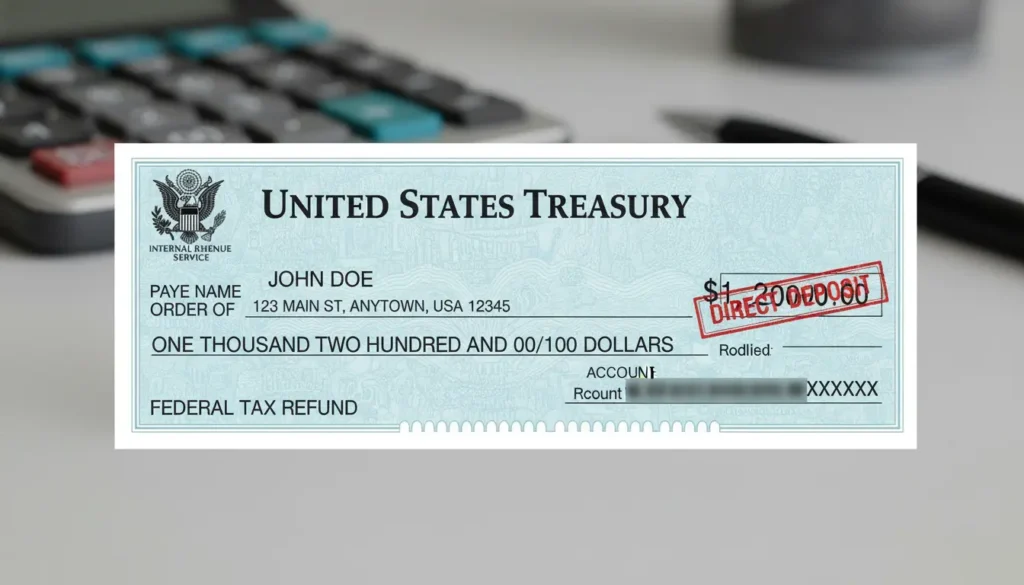
The IRS announcement about a 2000 IRS direct deposit in January 2026 has many people searching for clear instructions. This guide explains practical steps, expected timelines, and what to do if you do not receive the payment.
2000 IRS Direct Deposit January 2026 Guidelines
First, confirm whether you are eligible. The IRS typically bases direct deposit payments on recent tax returns, advance credits, or specific program eligibility announced by the Department of the Treasury.
Key points to check now: confirm your most recent tax return filing, your bank account information on file, and any IRS messages in your online account. If the IRS requires extra verification for certain filers, responding quickly will speed processing.
Who is likely eligible for the 2000 IRS direct deposit
Eligibility varies by program. Common eligibility triggers include recent tax filings, qualifying household income thresholds, and previous enrollment in credit or rebate programs.
- Filed 2024 or 2025 federal tax return with direct deposit info
- Previously received IRS advance payments or credits
- No outstanding identity verification holds or federal offsets
Documents and details to have ready
Gather these items before you check status or contact the IRS. Having them ready saves time and reduces errors.
- Most recent federal tax return (2024 or 2025)
- Bank routing and account numbers (verify accuracy)
- Social Security number or ITIN
- Any IRS notices or letters you received in late 2025 or early 2026
The IRS will not call unsolicited to ask for bank account passwords or to demand payment. Use official IRS online tools to check status.
Timeline for the 2000 IRS Direct Deposit
Understanding the timeline helps set expectations. Below is a typical sequence and realistic time windows based on past IRS processing behavior.
Typical processing stages
- Announcement and program start: IRS announces eligibility and start dates (early January 2026 for this round).
- Verification and batching: IRS verifies records, which can take 7 to 21 days depending on volume and identity checks.
- Payment transmission: Once approved, the agency transmits payments to banks. Transmissions commonly occur in batches over several days.
- Bank posting: Banks usually post direct deposits within 1 to 3 business days after transmission.
Overall, expect from announcement to full posting: about 2 to 6 weeks in normal conditions. If verification is required, add extra time. If you do not see a deposit after six weeks, follow the steps below.
How to Get Your 2000 IRS Direct Deposit
Follow these step-by-step actions to confirm eligibility and speed receipt of the payment. Each step is practical and prioritized for most users.
Step 1: Check official IRS tools
Visit the IRS Online Account and the Where’s My Refund or Get My Payment tool. These show current status, processing stage, and whether the IRS has your bank info.
Step 2: Confirm your bank details
If you filed a recent tax return, check the bank routing and account numbers you provided. Incorrect details often cause reissued paper checks or delays.
Step 3: Respond to IRS letters or messages
If the IRS requests identity verification or additional documents, respond quickly using the secure channels indicated. Ignoring a letter is the most common cause of delay.
Step 4: If the deposit is missing
- Double-check your tax account and the bank’s incoming ACH history
- Look for a paper check or debit card mailed instead of direct deposit
- If you suspect an offset (past-due debts), the IRS notice will explain the offset amount
If there is no clear answer after checking tools and mail, file a formal inquiry via your IRS Online Account or your tax professional can submit an advocate request on your behalf.
Common Reasons for Delay or Nonreceipt
Knowing why deposits are delayed helps you address problems faster. Here are the most common causes:
- Incorrect or missing bank account information on your most recent tax filing
- Identity verification holds or incomplete documentation
- Offsets for federal or state debts
- Batch processing delays during high-volume periods
When to contact the IRS
Contact the IRS only after you have checked online tools and waited the typical processing windows. Calling too early can add confusion; use the IRS online account messages first for status details.
Practical Tips to Speed Receipt
- File current tax returns electronically and include accurate direct deposit info.
- Create or verify your IRS Online Account to get real-time notices.
- Keep mail secure and watch for IRS letters describing next steps.
- Work with a certified tax pro if identity verification or offsets apply.
Example case study
Maria filed her 2025 tax return with direct deposit and used the same bank account she used in prior years. The IRS announced the payment on January 6, 2026. Her record was verified and the payment was batched on January 14. The bank posted the deposit on January 16. Maria received an email alert and confirmed the funds the same day.
Contrast that with Jamal, who had a typo in one digit of his routing number. The IRS marked the deposit as undeliverable and mailed a paper check instead, which arrived three weeks later. Checking the online tools would have shown the routing error sooner and allowed Jamal to fix the account for future payments.
Final checklist
- Verify eligibility and recent tax filings
- Confirm bank account numbers and IRS Online Account access
- Watch for IRS notices and respond quickly
- Allow 2 to 6 weeks for full processing, longer if verification is required
Following these steps will help you track and, in many cases, speed the arrival of a 2000 IRS direct deposit in January 2026. If you still have questions after using official IRS tools, consider contacting a tax professional for personalized assistance.