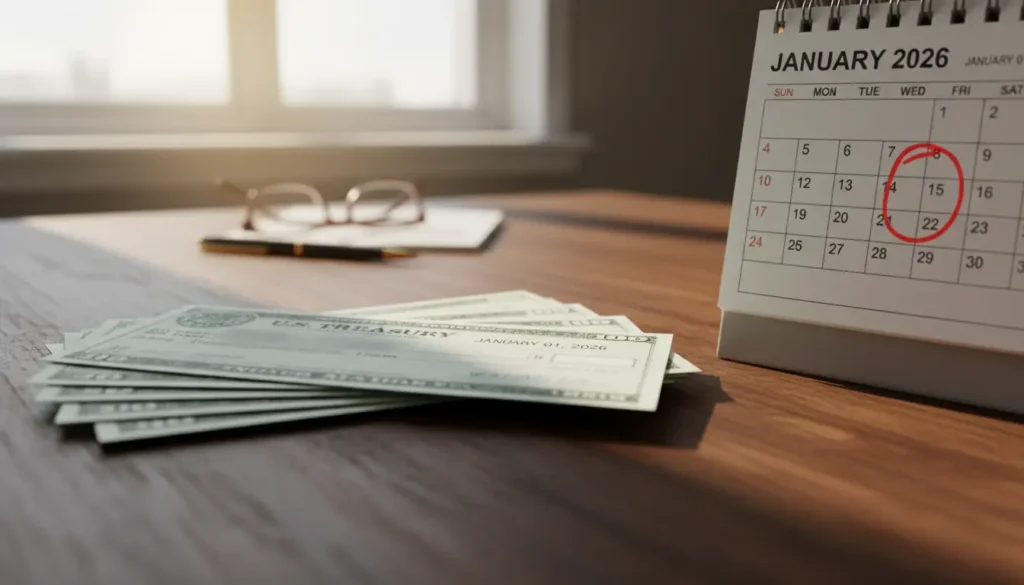
This article explains the $2000 IRS deposit January 2026 eligibility rules and payment timeline in clear, practical terms. It covers who qualifies, what documentation matters, when payments go out, and steps to take if you don’t receive the deposit.
$2000 IRS Deposit January 2026: Who Qualifies
The $2000 IRS deposit announced for January 2026 is targeted at specific taxpayers based on income, filing status, and prior-year tax data. Eligibility generally depends on adjusted gross income (AGI), dependent status, and recent tax filings.
Key eligibility factors include:
- Adjusted gross income limits — eligibility may phase out at higher incomes.
- Filing status — single, married filing jointly, head of household rules apply.
- Dependent eligibility — some dependents may qualify through a parent or guardian’s return.
- Recent tax filings — most payments use the latest processed 2024 or 2025 tax return data.
Income thresholds and phaseouts
The IRS typically sets AGI thresholds that determine full, partial, or no payment. For example, a simplified structure might be full payments for AGI below a base limit, partial payments for AGI in a middle range, and no payment above a top threshold.
Check the official IRS guidance for exact income limits. If you’re near the cutoff, small changes in reported income can affect the payment amount.
Documentation and Timing That Matter for the $2000 IRS Deposit January 2026
To be on the IRS list for the January 2026 deposit, your most recent tax filing generally must be processed before the cut-off date the IRS sets for the program.
Make sure your return includes current direct deposit information and that your mailing address is up to date. Nonresident or incomplete returns can delay or prevent payment.
- Processed 2024 or 2025 tax return: primary data source for eligibility
- Direct deposit on file speeds delivery compared with mailed checks
- Social Security recipients may be auto-enrolled using SSA data
Special cases
People who did not file a return in 2024 or 2025 but receive Social Security or veterans benefits may still qualify if the IRS has their information from federal benefit programs.
Nonfilers should check the IRS non-filer tool (if offered) or file a simple return to claim eligibility before the deadlines announced by the IRS.
The IRS often uses the most recently processed tax return to determine eligibility. Filing or correcting a return before the IRS cut-off can change whether you get a payment in January.
Payment Timeline for $2000 IRS Deposit January 2026
Understanding the timeline helps you know when to expect the money and what to do if it doesn’t arrive. The IRS typically follows these steps:
- Eligibility determination from processed returns and federal benefit records.
- Payment authorizations issued in batches to Treasury for direct deposit or paper check printing.
- Direct deposits sent first, followed by mailed checks and prepaid debit cards if used.
Most direct deposits hit bank accounts within 1–3 business days after issuance. Paper checks can take 7–21 days depending on mail service.
What to track
- IRS Get My Payment (or current IRS payment status tool) for official status updates.
- Your bank account for incoming ACH transactions from the U.S. Treasury.
- Mail delivery timelines for paper checks if you don’t get deposit information.
What To Do If You Don’t Receive the $2000 Deposit
If you expected the January 2026 deposit and it doesn’t arrive, follow these steps:
- Check the IRS online payment status tool for messages or errors.
- Confirm the bank account on file via the return you filed or your IRS account.
- Review your processed tax return for errors in Social Security numbers or dependents.
- If needed, file an amended return to correct incorrect information — but note that amendments can delay eligibility reviews.
- Contact the IRS only if the online tools direct you or you’ve waited beyond published timelines.
Common reasons for delays
Delays often happen because of mismatched bank account numbers, pending identity verification, unprocessed tax returns, or eligibility changes after an amended return.
Example Case Study
Case: Maria, a single filer, AGI $42,000. She filed her 2025 return electronically in March and included direct deposit info. Her return was processed in November, and she was flagged eligible by the IRS. Her direct deposit was sent the first week of January 2026 and posted two days later.
Lesson: Filing early, ensuring accurate bank details, and confirming your return processed can move you into the January payment batch.
Final Checklist Before January 2026
- Confirm your most recent tax return is filed and processed.
- Verify direct deposit and mailing address in IRS records.
- Use IRS online tools to check payment status before calling.
- Keep documentation of your tax return and any IRS notices.
Staying organized and checking the IRS tools regularly are the best ways to confirm eligibility and track the $2000 IRS deposit January 2026. If you are unsure about your status, consult a tax professional for personalized help.