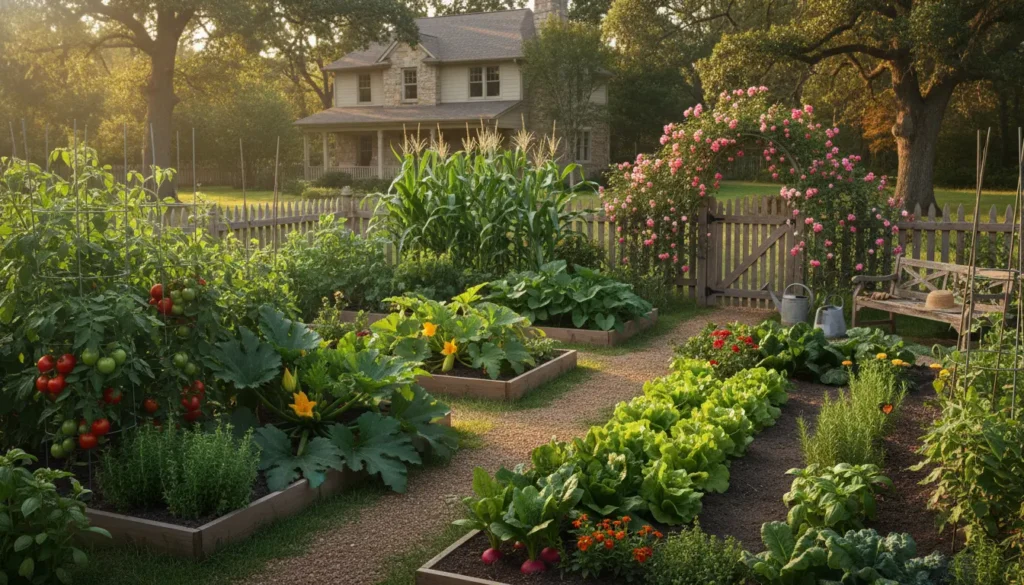
Starting a vegetable garden is a practical way to grow fresh food, learn basic horticulture, and save money. This guide gives clear, step-by-step instructions you can use whether you have a backyard, balcony, or small plot.
Choose a Site to Start a Vegetable Garden
Selecting the right location is the first and most important step to start a vegetable garden. Vegetables need sunlight, good drainage, and easy access to water.
Look for a spot that gets at least 6 hours of direct sun daily. Avoid low areas where water pools after rain.
Sun, Soil, and Access
Sun exposure determines what you can grow. Most common vegetables prefer full sun. If your site has partial shade, choose leafy crops like lettuce and spinach.
Ensure the site is near a water source and has simple access for routine maintenance like weeding and harvesting.
Prepare Soil to Start a Vegetable Garden
Good soil is the foundation of a productive vegetable garden. Preparing soil improves drainage, nutrient content, and root growth.
Test your soil first using a home test kit or a local extension service. That tells you pH and basic nutrient levels.
Soil Preparation Steps
- Clear weeds and grass, then loosen the top 8–12 inches with a fork or tiller.
- Amend with compost: aim for 2–3 inches of compost worked into the topsoil.
- Adjust pH if necessary: most vegetables prefer pH 6.0–7.0.
- Consider raised beds for compacted or poor soils to improve root space and drainage.
Plan What to Plant in a Vegetable Garden
Planning prevents wasted space and effort. Choose crops that suit your climate, season, and personal preferences.
Start with easy, productive vegetables such as tomatoes, peppers, beans, lettuce, and zucchini.
Crop Selection Tips
- Grow high-yield, space-efficient plants if you have limited room (e.g., cherry tomatoes, bush beans).
- Pick varieties labeled as disease resistant for easier management.
- Rotate crops yearly to reduce pest and disease buildup.
Planting and Care for Your Vegetable Garden
Proper planting and consistent care help plants establish quickly and produce well. Follow planting dates and spacing recommendations on seed packets or plant labels.
Water deeply and less often rather than shallow frequent watering. Aim for the soil to be moist to a depth of several inches.
Routine Garden Care
- Water early morning to reduce evaporation and foliar disease risk.
- Mulch with straw or wood chips to keep soil moist and suppress weeds.
- Fertilize lightly based on soil test recommendations—over-fertilizing can harm plants.
- Stake or cage vining plants like tomatoes to improve air flow and reduce disease.
Common Problems When You Start a Vegetable Garden and Solutions
Pests, diseases, and nutrient issues are common but manageable. Early detection and simple fixes keep plants productive.
Use these practical solutions to common problems.
Pests and Disease Management
- Handpick large pests like caterpillars or slugs and dispose of them away from the bed.
- Use row covers early in the season to protect young plants from insects and birds.
- Encourage beneficial insects—ladybugs and lacewings—by planting flowers like marigolds and dill nearby.
- Remove diseased plants promptly and avoid overhead watering to reduce fungal issues.
Harvesting and Extending the Season in Your Vegetable Garden
Harvest regularly to encourage more production and keep plants healthy. Many vegetables taste best when picked at peak ripeness.
Extend the season with simple tactics like row covers, cold frames, or planting succession crops for continuous harvest.
Adding just 1 inch of compost per year can significantly improve soil structure and fertility over time, increasing yields without chemical fertilizers.
Small Real-World Case Study
Case study: A small urban gardener in Portland used two 4×8-foot raised beds to start a vegetable garden. They planted tomatoes, bush beans, salad greens, and basil.
After preparing soil with compost and following a simple watering schedule, the beds produced continuous salad greens and a reliable tomato harvest throughout summer. Using stakes and monthly light fertilizer kept disease low and yields steady.
Simple Checklist to Start a Vegetable Garden
- Choose a sunny, well-drained site near water.
- Test soil and add compost; adjust pH if needed.
- Select easy crops and plan spacing and succession planting.
- Plant according to local frost dates and support vining crops.
- Water deeply, mulch, and monitor for pests and disease.
Starting a vegetable garden is a manageable project with clear benefits: fresh food, exercise, and learning. Begin small, observe closely, and adjust each season. With a little planning and routine care, your vegetable garden will become more productive and easier to manage over time.