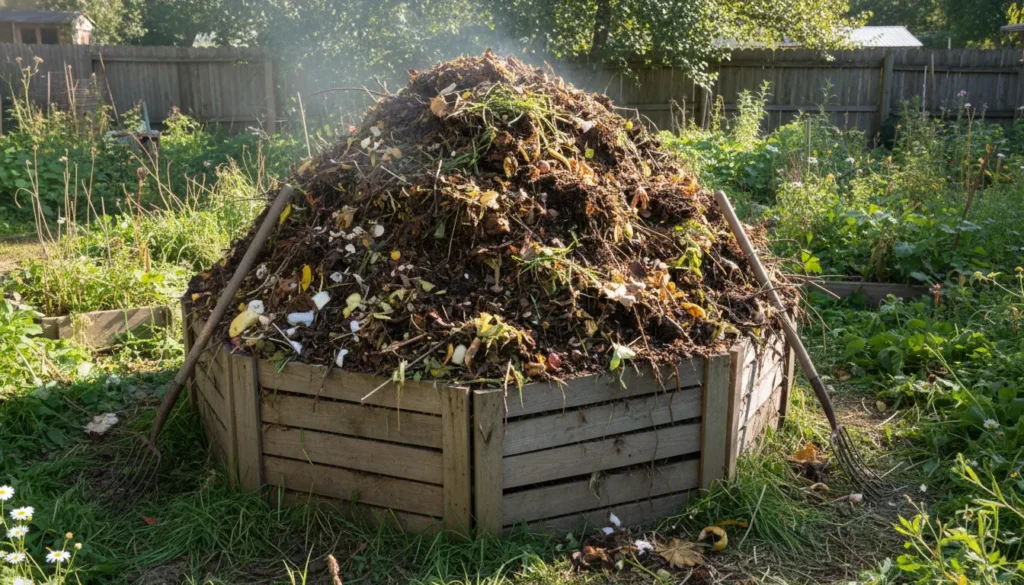
Composting converts kitchen scraps and yard waste into rich soil. This guide shows practical steps to start home composting, choose the right method, and avoid common problems.
What Is Home Composting?
Home composting is the biological breakdown of organic matter into humus. It uses microbes, oxygen, moisture, and balanced materials to produce nutrient-rich compost you can use in gardens or potted plants.
Why Choose Home Composting
Home composting reduces household waste, cuts landfill contribution, and creates free soil conditioner. It also improves soil structure, water retention, and plant health when applied to beds and containers.
Core Principles of Home Composting
Success depends on balancing four elements: carbon, nitrogen, oxygen, and moisture. Getting these right speeds decomposition and prevents odors.
- Carbon (Brown materials): Leaves, straw, shredded paper.
- Nitrogen (Green materials): Vegetable scraps, coffee grounds, grass clippings.
- Oxygen: Turn the pile or use a tumbler to aerate.
- Moisture: Keep the pile as damp as a wrung-out sponge.
Choosing a Home Composting Method
Pick a method that fits your space and commitment level. Each option works with the same basic inputs but differs in speed, maintenance, and location.
Bin Composting
Bin systems are enclosed and tidy. They suit small yards and reduce pests. Rotate layers of browns and greens and turn every 1–2 weeks for best results.
Compost Tumbler
Tumblers speed up aeration and are less work when rotating. They heat faster and are ideal for suburban homes where turning a pile is inconvenient.
Vermicomposting
Worm bins use red wigglers to convert kitchen scraps into castings. This method is efficient indoors or on balconies and produces excellent fertilizer for houseplants.
Step-by-Step Start Guide for Home Composting
Follow these steps to build a reliable compost system in three simple stages.
- Choose a location: Pick a partially shaded spot with good drainage.
- Build base layers: Start with coarse browns like twigs for airflow, then add greens.
- Maintain balance: Aim for a 25–30:1 carbon to nitrogen ratio by volume; mix browns and greens regularly.
- Aerate and water: Turn the pile or spin the tumbler; keep it moist but not soggy.
- Harvest compost: After 2–6 months (depending on method), remove finished dark crumbly compost for use.
Troubleshooting Common Home Composting Problems
Problems are solvable with simple adjustments. Check the pile’s smell, appearance, and temperature to diagnose issues.
- Smells bad: Add more brown materials and aerate to reduce anaerobic conditions.
- Pile is dry: Add water while mixing; break up dry clumps to rehydrate the center.
- Slow breakdown: Chop materials smaller, add nitrogen-rich greens, and ensure adequate moisture and aeration.
- Pests appear: Bury food scraps deeper, use a closed bin, and avoid oily or meat scraps.
Materials to Use and Avoid
Good materials speed decomposition and provide nutrients. Avoid items that attract pests or slow the process.
- Use: fruit and vegetable scraps, coffee grounds, eggshells, leaves, shredded paper, grass clippings.
- Avoid: meat, dairy, oils, diseased plants, weeds with seeds, pet waste from carnivores.
Compost can raise soil organic matter by up to 20 percent in a year when applied regularly, improving water retention and plant resilience.
Small Real-World Example
Case study: A three-person household in Portland started a 200-liter bin in spring. They balanced kitchen scraps with yard leaves and turned the pile biweekly. In six months they produced about 120 liters of finished compost and reduced weekly trash by two-thirds.
The family used the compost in raised vegetable beds and saw stronger tomato yields the following season. Minimal time investment and a simple tumbler proved effective for their schedule.
Practical Tips for Ongoing Success
Consistency is more important than perfection. Small habits keep a compost system healthy without much effort.
- Chop larger scraps to speed breakdown.
- Keep a countertop caddy for scraps to reduce barriers to composting.
- Alternate wet and dry materials in layers to maintain balance.
- Use finished compost as a top dressing or soil amendment rather than replacing all potting mix at once.
Quick Checklist to Start Today
Use this checklist to get your first compost pile going this weekend.
- Choose bin or tumbler and place it in shade.
- Gather brown and green materials.
- Start with a coarse base, then add mixed layers.
- Water to dampness and turn every 1–2 weeks.
Home composting is a low-cost way to transform household waste into a valuable gardening resource. With the right balance, simple maintenance, and a small feeding routine, most households will see compost ready within months.