Why Start a Vegetable Garden
Starting a vegetable garden gives you fresh produce, saves money, and connects you with nature. It also improves your home landscape and can be a relaxing hobby.
This guide explains how to start a vegetable garden with clear steps, short tasks, and practical tips for beginners.
Choose the Right Spot for Your Vegetable Garden
Location is the first decision when you start a vegetable garden. Most vegetables need 6–8 hours of direct sunlight daily.
Pick a flat or gently sloped area with good drainage and easy access to water. Avoid low spots that collect cold air or water.
Sunlight and Space
Observe sun patterns for a few days before you plant. Note where shade falls in morning and afternoon.
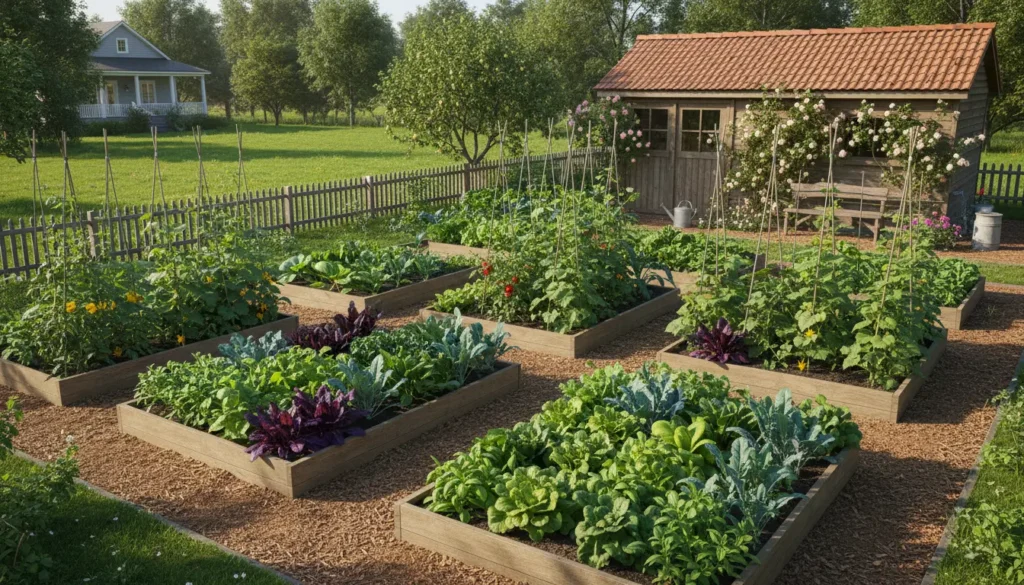
Plan bed sizes you can reach from both sides to avoid compacting soil. Common beginner beds are 4 feet wide by 8–12 feet long.
Prepare Soil and Raised Beds
Healthy soil is the foundation of a productive vegetable garden. Test the soil if possible or improve it with compost.
Raised beds speed warm-up and improve drainage. Use untreated wood, stone, or metal for frames.
Soil Mix and Amendments
A simple soil mix for raised beds is 60% topsoil, 30% compost, and 10% coarse sand or perlite for drainage. Adjust based on local soil tests.
Add slow-release organic fertilizer or bone meal at planting time. Avoid over-fertilizing, which can harm plant roots.
Pick Easy Vegetables for Beginners
Start with vegetables that are forgiving and fast to harvest. These give quick wins and build confidence.
- Leafy greens: Lettuce, spinach, and Swiss chard.
- Root crops: Radishes and carrots (under loose soil).
- Nightshades: Cherry tomatoes and peppers (starter varieties).
- Legumes: Bush beans and peas for fresh beans and nitrogen fixation.
When to Plant
Check your local last frost date and plant cool-season crops earlier. Warm-season crops like tomatoes go in after the last frost.
Use seed packets or local extension guides for sowing depth and spacing. Proper spacing reduces disease and improves yields.
Planting and Watering Basics
Plant seeds or transplants to the recommended depth and gently firm the soil. Water immediately after planting to settle roots.
Water consistently. Vegetables need about 1–1.5 inches of water per week depending on weather.
Watering Tips
- Water early in the morning to reduce evaporation and fungal problems.
- Use a soaker hose or drip irrigation for steady, deep watering.
- Mulch with straw or shredded leaves to retain moisture and suppress weeds.
Pest and Disease Basics
Integrated pest management (IPM) keeps problems manageable without heavy chemicals. Start with prevention and monitoring.
Inspect plants weekly for insect damage, yellowing leaves, or spots. Remove affected leaves or use physical barriers like row covers when needed.
Common Simple Remedies
- Handpick larger pests like caterpillars and slugs.
- Use insecticidal soap for aphids or soft-bodied insects.
- Rotate crops each season to reduce soil-borne diseases.
Harvesting and Ongoing Care
Harvest regularly to encourage continuous production. Pick vegetables when they are young and tender for best flavor.
Keep records of planting dates, varieties, and yields to improve next season. Simple notes help you learn what works in your space.
Radishes can be ready to eat in as little as 25 days, making them one of the fastest crops to harvest in a beginner vegetable garden.
Small Real-World Case Study: A 10×10 Raised Bed
Maria, a beginner gardener, converted a 10×10 foot sunny corner into two 4×10 raised beds. She filled them with a mix of compost and local topsoil.
In her first season she planted lettuce, tomatoes, bush beans, and radishes. By spacing plants correctly and watering with a soaker hose, she harvested weekly salads and 20 pounds of tomatoes.
Her simple steps: pick a sunny spot, test and amend soil, start with easy crops, and water consistently. Small trials and notes helped her refine the bed layout for year two.
Simple Seasonal Checklist to Start a Vegetable Garden
- Choose a sunny spot and map the garden layout.
- Build or prepare beds and improve soil with compost.
- Select 4–6 easy crops for your first season.
- Plant according to frost dates and water deeply.
- Monitor pests weekly and harvest regularly.
Final Tips for Success
Start small and expand after one successful season. Simple, repeatable routines yield the best long-term results.
Join a local gardening group or extension service for regional advice. Local knowledge helps with timing and common pests.
With modest effort and these practical steps, anyone can start a vegetable garden and enjoy fresh, homegrown produce.