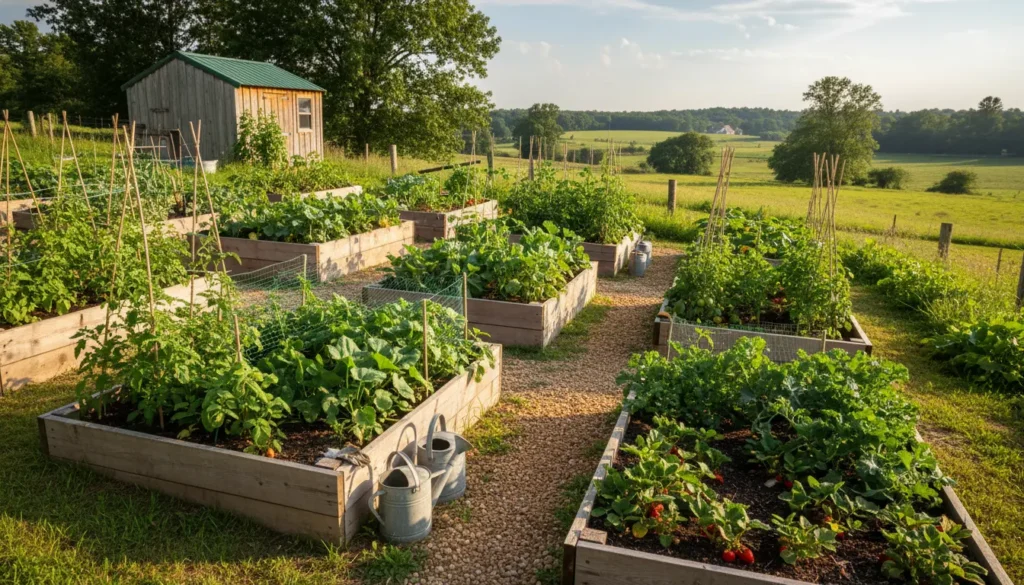
Raised vegetable beds are a simple, productive way to grow food in small yards, patios, or sloped land. This guide explains why raised beds work, how to plan and build them, and how to manage soil, watering, and planting for reliable harvests.
Why Choose Raised Vegetable Beds
Raised vegetable beds concentrate soil and nutrients where roots need them most. They warm faster in spring and drain better than compacted ground, giving plants a growth advantage.
For many beginners, raised beds reduce weeding, prevent soil compaction, and make maintenance easier by defining growing spaces.
Benefits of Raised Vegetable Beds
- Improved drainage and soil structure
- Better soil control and fertility
- Fewer weeds and pests near pathways
- Easier access for planting and harvesting
- Flexible placement on patios or poor soils
Planning Your Raised Vegetable Beds
Start with location and size. Choose a spot with at least 6 hours of direct sunlight for most vegetables. Ensure access to water and good air circulation to limit disease.
Keep beds narrow so you can reach the center from either side without stepping into the bed. A common width is 3 to 4 feet. Lengths vary with space and materials.
Material and Size Choices
- Wood frames: cedar or rot-resistant lumber is common. Avoid treated wood that may leach chemicals.
- Concrete blocks or bricks: durable and great for edge seating.
- Metal beds: long-lasting but can heat up in hot climates.
- Height: 6–12 inches is fine for shallow crops, 12–24 inches for deeper-rooted vegetables.
How to Build Raised Vegetable Beds
The process below uses common lumber, but the steps apply to other materials. Measure, cut, and assemble frames on level ground.
Step-by-step Build
- Mark the bed outline and clear sod or weeds. Loosen compacted soil beneath if possible.
- Assemble the frame and place it on the site. Ensure it is level and square.
- Add a base layer of coarse organic matter if drainage is poor (optional).
- Fill with a planting mix: 50% topsoil, 30% compost, 20% coarse materials (coconut coir, aged manure, or perlite).
- Lightly firm the mix and water to settle. Adjust level as needed.
Example soil mix ratios work well: for a 1 cubic yard mix, combine about 0.5 cubic yards screened topsoil, 0.3 cubic yards compost, and 0.2 cubic yards coarse amendment. Adjust for local soil quality.
Irrigation and Maintenance for Raised Vegetable Beds
Consistent moisture is critical. Install a drip irrigation line or soaker hose under mulch to reduce watering frequency. Water early in the day to reduce disease pressure.
Mulch beds with straw or shredded leaves to conserve moisture and suppress weeds. Top-dress with compost midseason to maintain fertility.
Routine Tasks
- Weed weekly to keep competition low
- Monitor soil moisture and water as needed
- Rotate crops seasonally to reduce pests and nutrient depletion
- Test soil every 2–3 years for pH and nutrient balance
Planting and Crop Choices for Raised Vegetable Beds
Raised beds suit almost any vegetable. Use intensive planting patterns like square-foot gardening to maximize yield in small areas.
- Leafy greens: lettuce, spinach, and kale for quick turnover
- Root crops: carrots and beets in deeper beds
- Fruiting crops: tomatoes and peppers in larger, well-supported beds
- Companion planting: basil with tomatoes, marigolds to deter nematodes
Case Study: Backyard Raised Bed Project
Jane converted a 10 x 10 ft patch of lawn into three 4 x 3 ft raised vegetable beds using cedar boards. She filled them with a 60/40 mix of screened topsoil and compost and installed a manual drip line on a timer.
In the first season Jane grew salad greens, bush beans, and cherry tomatoes. She reported fewer weeds, simpler watering, and a 30% higher yield than her previous in-ground attempts.
Troubleshooting Common Problems in Raised Vegetable Beds
Overwatering is common in small beds. Improve drainage with coarser materials in the mix and avoid daily shallow watering. Deep, infrequent watering encourages strong roots.
Pest pressure can be reduced by clean edges and rotating crops. Use row covers for early-season protection from insects and frosts.
Quick Fixes
- Yellowing leaves: check for nutrient deficiency and pH; add compost if needed
- Wilting: check soil moisture and root health; adjust watering schedule
- Pests: handpick, use physical barriers, or introduce beneficial insects
Raised vegetable beds are flexible, efficient, and beginner-friendly. Start with one or two beds, learn from the first season, and expand as you gain confidence. With the right soil mix, water plan, and crop choices, raised beds deliver consistent homegrown vegetables with manageable effort.