How to Start a Vegetable Garden: First Steps
Starting a vegetable garden begins with simple planning. Choose a spot, decide what to grow, and gather basic tools before you plant.
These early decisions reduce mistakes and make the garden easier to manage through the season.
Choose the Right Location
Pick a location that gets at least six hours of direct sun daily for most vegetables. Observe the space at different times to see morning and afternoon light patterns.
Also consider access to water, drainage, and proximity to your kitchen for easy harvesting.
Decide Garden Type and Size
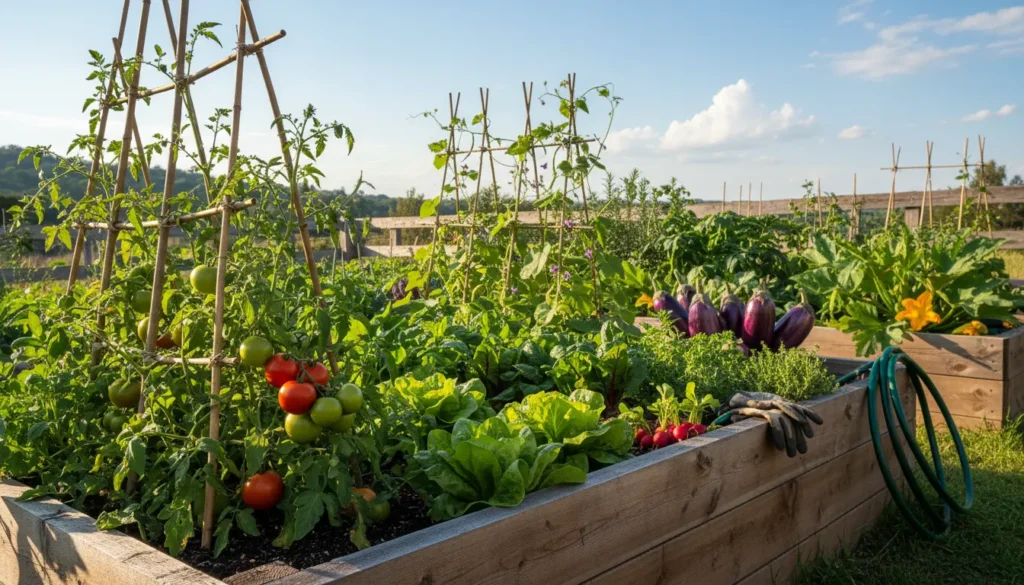
Choose between in-ground rows, raised beds, or containers. For beginners, one or two raised beds measuring 4 by 8 feet are manageable and productive.
Smaller plots mean less weeding and simpler watering schedules.
How to Start a Vegetable Garden: Prepare Soil and Beds
Soil quality is the most important factor for healthy plants. Most vegetables prefer loose, fertile soil rich in organic matter.
Testing soil pH and nutrient levels helps you add the right amendments for better growth.
Test and Improve Soil
Buy an inexpensive soil test kit or send a sample to a local extension service. Aim for a pH around 6.0 to 7.0 for most crops.
Add compost, well-rotted manure, or a balanced organic fertilizer to improve structure and nutrients.
Build Raised Beds or Prepare Rows
Raised beds warm faster in spring and drain well, making them ideal for short seasons. Fill beds with a mix of topsoil and compost.
If using rows, loosen the soil to at least 8–12 inches and remove large rocks or roots.
How to Start a Vegetable Garden: Planting Basics
Planting at the right time and spacing crops properly gives you healthier plants and higher yields. Follow seed packet instructions for depth and spacing.
Use succession planting to extend harvests and avoid overcrowding that leads to disease.
Start Seeds or Buy Seedlings
Some crops like tomatoes and peppers are easier to transplant as seedlings, while lettuce, carrots, and beans are simple to direct-sow from seed.
Start seeds indoors earlier for long-season crops if your growing season is short.
Use Companion Planting and Crop Rotation
Companion planting can deter pests and improve yields. For example, basil near tomatoes can improve flavor and reduce pests.
Rotate families of vegetables each year to limit soil-borne diseases and nutrient depletion.
How to Start a Vegetable Garden: Watering and Maintenance
Consistent watering is crucial. Most vegetables need about 1 inch of water per week, applied to the soil rather than foliage.
Mulch helps retain moisture, suppress weeds, and moderate soil temperature.
Watering Tips
- Water early in the morning to reduce evaporation and fungal issues.
- Use drip irrigation or soaker hoses to deliver water directly to roots.
- Check soil moisture with your finger; water when the top 1–2 inches feel dry.
Weeding, Staking, and Pest Control
Weed regularly to reduce competition for nutrients. Stake or cage tall plants like tomatoes to improve air circulation and fruit quality.
Monitor pests and use physical controls or organic treatments first. Encourage beneficial insects by planting flowers nearby.
How to Start a Vegetable Garden: Harvesting and Season Care
Harvest crops at peak ripeness for best flavor and to encourage continued production. Most vegetables produce more if picked regularly.
End-of-season cleanup reduces overwintering pests and improves next year’s yields.
When and How to Harvest
- Leafy greens: harvest outer leaves regularly to allow regrowth.
- Tomatoes and peppers: pick when fully colored and slightly soft.
- Root crops: harvest when size matches expectations on seed packets.
Prepare for Next Season
Remove spent plants, add compost, and consider a cover crop to protect soil over winter. Record what worked and what didn’t for next year.
Raised beds can increase yields by 20 to 30 percent per square foot compared with traditional rows because of improved soil structure and microclimate.
Simple Tools and Supplies for Beginners
You don’t need expensive gear to start. A few essential tools will cover most tasks and make work easier.
- Hand trowel and garden fork
- Pruning shears and gloves
- Hoe for weeding and a watering can or hose with a nozzle
- Compost or well-rotted manure
- Mulch such as straw or shredded leaves
Small Case Study: A First-Year Raised Bed Garden
In spring, a homeowner built one 4 x 8 foot raised bed filled with a 50/50 mix of topsoil and compost. They planted tomatoes, lettuce, bush beans, and herbs.
Over the season they harvested twice-weekly salads and 25 pounds of tomatoes from four plants. Weekly maintenance took about 2–3 hours, mostly watering and light weeding.
They reported the bed produced enough produce to reduce grocery lettuce and tomato purchases by about 30 percent in summer months.
Quick Checklist to Start Today
- Select sunny site and measure bed space.
- Test soil and add compost as needed.
- Choose 4–6 easy crops for your first season (lettuce, radish, tomato, beans, herbs).
- Set up simple irrigation and add mulch after planting.
- Monitor weekly for pests and harvest regularly.
Starting a vegetable garden is a step-by-step process. Keep records, learn from each season, and adjust planting choices to your space and climate.
With basic preparation and regular care, even a small garden can supply fresh produce and a rewarding hobby.