Why Home Composting for Beginners Matters
Home composting turns kitchen and yard waste into nutrient-rich soil. It reduces landfill volume and improves garden health.
This guide gives clear steps, common tools, and troubleshooting tips for people starting home composting for beginners.
Basic Principles of Home Composting for Beginners
Compost depends on three elements: carbon, nitrogen, and oxygen. Balance these to allow microbes to break down organic material.
Think of carbon as browns, nitrogen as greens, and oxygen as the air that keeps the pile active.
Key Components
- Browns: dry leaves, cardboard, shredded paper
- Greens: fruit and vegetable scraps, coffee grounds, fresh grass clippings
- Air: turn the pile every 1–2 weeks to add oxygen
Choosing a Compost System
Beginners can choose from simple bins, tumblers, or a layered heap. Each has trade-offs in cost, space, and maintenance.
Consider how much waste you generate and where you will place the system.
Options and Recommendations
- Open pile: Lowest cost, needs space and occasional turning.
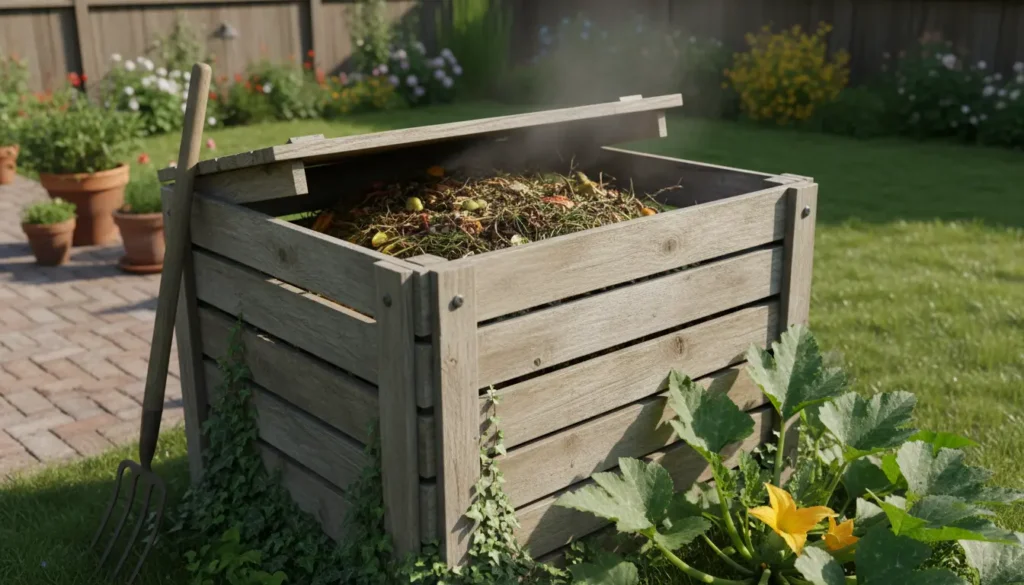
- Compost bin: Contained, neater, good for most yards.
- Tumbler: Faster, easier to turn, suitable for small yards.
- Bokashi or worm bins: Ideal for apartments or small indoor setups.
Step-by-Step Starter Plan
Follow this simple routine to create a working compost system in weeks rather than months.
- Pick a bin and spot: shaded, level, and near a water source.
- Add a 3–6 inch base of browns for drainage and airflow.
- Layer greens and browns in roughly 1:2 ratio by volume.
- Moisten so the pile feels like a wrung-out sponge.
- Turn the pile every 1–2 weeks to introduce oxygen.
- Harvest finished compost when dark, crumbly, and earthy-smelling.
Tools and Materials for Home Composting for Beginners
You do not need expensive tools to compost, but a few items make the process easier and cleaner.
- Compost bin or tumbler
- Pitchfork or turning tool
- Kitchen collection pail with a lid
- Shredder or scissors for breaking down larger materials
Common Mistakes and How to Avoid Them
Beginners often make avoidable errors that slow decomposition or attract pests.
- Too wet: Add more browns and turn the pile to aerate.
- Too dry: Water lightly and mix to distribute moisture.
- Bad smells: Check for lack of oxygen or too many greens; turn pile and add browns.
- Attracting pests: Avoid adding meat, dairy, oily foods, or large chunks of food waste.
Troubleshooting Guide
Use these quick checks when something in the pile seems off.
- Slow breakdown: Chop materials smaller and increase turning frequency.
- Fleas or fruit flies: Cover food scraps with a layer of finished compost or dry leaves.
- Cold pile in winter: Insulate with straw or leave it to compost slowly; consider an indoor solution like Bokashi.
How to Use Finished Compost
Finished compost is versatile and benefits nearly every garden type.
Mix it into planting beds, use as a top dressing for lawns, or blend with potting mixes for containers.
Application Rates
- Vegetable beds: 1–2 inches of compost mixed into top 6 inches of soil.
- Lawns: Spread a thin 1/4 inch layer in spring or fall.
- Potted plants: Replace 25% of potting mix with compost for added nutrients.
Real-World Example: Small Backyard Success
Case study: A household of three started a 65-gallon tumbler and an open leaf pile. They combined kitchen scraps with shredded leaves and turned the tumbler weekly.
After six months they produced enough compost to amend two raised vegetable beds, reduced their weekly trash by nearly 30%, and reported healthier tomato and herb growth the following season.
Quick Tips for Long-Term Success
- Keep a small kitchen pail for scraps to avoid contamination of your main trash.
- Save dry leaves and shredded paper to maintain brown supplies year-round.
- Record basic observations: pile temperature, odors, and moisture to learn from seasonal changes.
Final Checklist for Home Composting for Beginners
- Choose a bin that fits your space and waste volume.
- Maintain a balance of browns and greens.
- Monitor moisture and aerate regularly.
- Use finished compost to improve soil and reduce chemical fertilizers.
Home composting for beginners is practical, low-cost, and effective. With small, consistent steps you can turn household waste into a valuable resource for your garden.