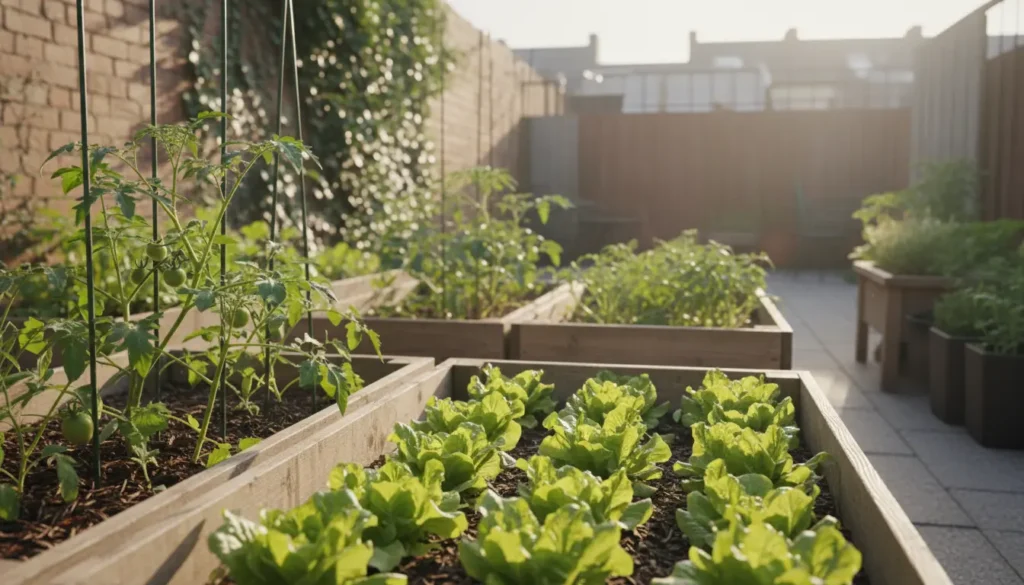
Why Choose a Raised Bed Vegetable Garden
Raised bed vegetable gardens are efficient for small spaces and improve soil drainage, warmth, and root growth. They reduce weed pressure and make planting and harvesting easier, especially for beginners.
Planning Your Raised Bed Vegetable Garden
Good planning simplifies construction and planting. Decide bed size, location, and materials before you buy supplies.
Choose Location for Raised Bed Vegetable Garden
Pick a spot with at least 6 hours of direct sunlight for most vegetables. Consider water access and flat ground.
Select Bed Size and Layout
Standard beds are 3–4 feet wide so you can reach the center from either side. Length can vary to fit your yard. Common dimensions are 4×8 feet or 3×6 feet.
Materials and Tools for a Raised Bed Vegetable Garden
Choose materials that are safe for food crops. Untreated wood, cedar, composite, or stone work well. Avoid pressure-treated wood with arsenic compounds.
- Materials: cedar boards, composite planks, or bricks
- Soil: quality topsoil, compost, and mineral amendments
- Tools: shovel, level, tape measure, drill, and stapler (if using fabric)
Building the Bed for a Raised Bed Vegetable Garden
Construction is straightforward. Assemble the frame, level it, and prepare the base before adding soil.
- Assemble frame on-site to avoid lifting heavy pieces.
- Level the ground so water drains evenly across the bed.
- Optionally line the base with cardboard to suppress weeds while allowing drainage.
Soil Mix for a Raised Bed Vegetable Garden
Soil quality determines plant health. Fill beds with a loose mix that retains moisture and drains well.
A reliable mix: 50% topsoil or screened loam, 30% compost, 20% peat moss or coconut coir and perlite. Adjust for local soil and crop needs.
Why Organic Matter Matters
Compost improves nutrient content and water retention. Add aged compost annually to replenish nutrients.
What to Plant in a Raised Bed Vegetable Garden
Choose crops by season and space. Mix quick-growing crops with longer-season plants for continuous harvests.
- Spring: lettuce, radishes, spinach, peas
- Summer: tomatoes, peppers, beans, cucumbers
- Fall: kale, carrots, beets, brassicas
Use succession planting and interplanting to maximize yield, for example sowing radishes between young lettuce rows.
Watering and Fertilizing Your Raised Bed Vegetable Garden
Raised beds dry faster than ground soil. Set up drip irrigation or soaker hoses to conserve water and deliver it to the root zone.
Fertilize based on crop needs. Balanced organic fertilizers or compost tea applied every 4–6 weeks support steady growth.
Pest and Disease Management in Raised Bed Vegetable Garden
Raised beds reduce some pest pressures but don’t eliminate issues. Use cultural controls first: crop rotation, clean tools, and proper spacing.
- Inspect plants weekly for pests and disease signs.
- Use row covers to protect young plants from insects.
- Encourage beneficial insects with flowering borders.
Seasonal Care and Crop Rotation
Change plant families each year within each bed to limit disease build-up and nutrient depletion. Rest beds or plant cover crops in winter.
Top-dress with compost each spring and remove diseased plant material promptly to reduce overwintering pests.
Raised beds warm faster in spring than in-ground rows, allowing earlier planting by as much as two to three weeks in cooler climates.
Small Real-World Example
Case study: A small urban homeowner converted a 10-by-8-foot patio area into two 4×4 raised beds. After filling them with a 50/30/20 soil mix and planting tomatoes, lettuce, and beans, they harvested weekly salads from May through October.
They used drip irrigation on a timer and added compost in late summer. The beds required less weeding than nearby containers and produced double the yield per square foot compared to previous efforts.
Common Mistakes to Avoid for Raised Bed Vegetable Garden
Be aware of common errors so you can avoid them from the start.
- Using poor-quality fill dirt that compacts and drains poorly.
- Building beds too wide to reach the middle comfortably.
- Neglecting soil testing and overapplying nitrogen-heavy fertilizers.
Quick Startup Checklist for a Raised Bed Vegetable Garden
- Select sunny location and measure bed layout.
- Choose materials and assemble frames.
- Prepare soil mix and fill beds.
- Plan and plant crops by season.
- Install watering system and add mulch.
Starting a raised bed vegetable garden is manageable with a short build and thoughtful planting. Follow the steps above to create productive beds that suit small yards and urban spaces.