Container vegetable gardening is a practical way to grow fresh produce when space is limited. This guide gives step-by-step instructions for beginners, focusing on simple choices and reliable care routines.
Why Choose Container Vegetable Gardening
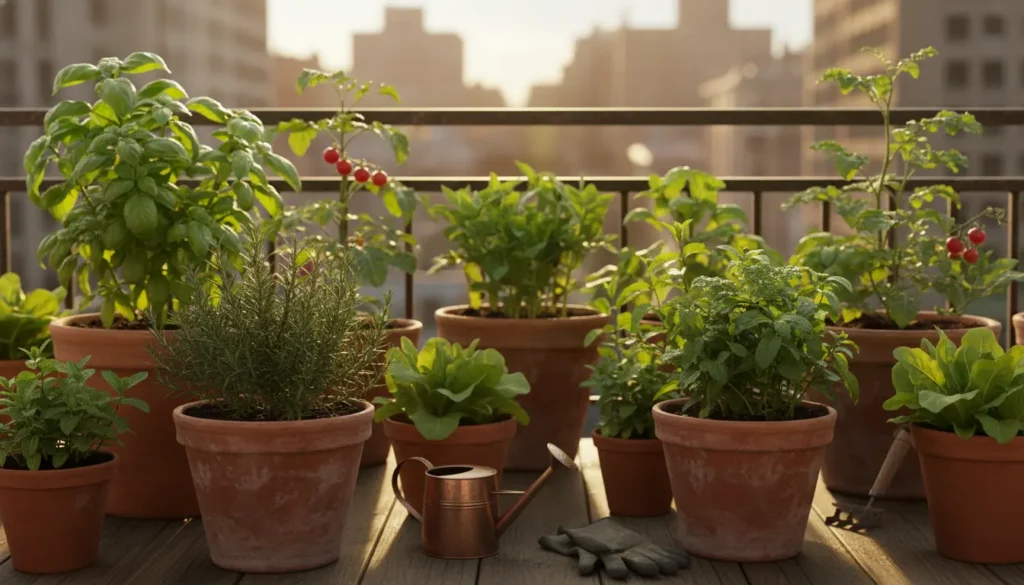
Container vegetable gardening works well for balconies, patios, and small yards. It reduces weed pressure and lets you control soil quality and drainage more easily than in-ground beds.
You can grow many common vegetables in pots and move containers to follow the sun. This makes container gardening ideal for urban homes and renters.
Getting Started with Container Vegetable Gardening
Before you plant, decide where your containers will live and which vegetables you want to grow. Consider sunlight, wind, and access to water when choosing locations.
Choose the Right Containers for Container Vegetable Gardening
Select containers with good drainage and enough volume for roots. Larger containers retain moisture better and reduce stress for plants during hot weather.
- Tomatoes and peppers: 10–20 gallon pots
- Leafy greens and herbs: 1–5 gallon pots or window boxes
- Root crops like carrots: deep, narrow containers (6–12 inches deep)
Pick the Best Soil and Fertilizer
Use a high-quality potting mix labeled for containers. Avoid garden soil, which compacts and drains poorly in pots.
Choose a balanced, slow-release fertilizer or a liquid feed you can apply every 2–4 weeks. Container-grown plants need more frequent feeding than those in ground beds.
Select Vegetables That Thrive in Containers
Some vegetables perform especially well in containers and are forgiving for beginners. Start with compact varieties marked as “bushy,” “patio,” or “dwarf.”
- Tomatoes (determinate patio types)
- Lettuce, spinach, and other leafy greens
- Herbs: basil, parsley, chives, mint (use separate pots for mint)
- Peppers and eggplants
- Radishes and small carrots
Planting and Care Tips for Container Vegetable Gardening
Good practices during planting and routine care improve yields and reduce problems. Follow these practical steps to keep plants healthy.
Watering and Drainage
Check soil moisture by sticking a finger 1–2 inches deep; water when the top inch feels dry. Containers dry out faster than ground soil, so expect to water more frequently.
- Water thoroughly until it runs from drainage holes.
- Use saucers to protect surfaces, but empty them to avoid waterlogged roots.
- Mulch the top of the pot with straw or shredded bark to reduce evaporation.
Sunlight and Placement
Most vegetables need 6–8 hours of direct sun daily. Place containers where they receive the most consistent sunlight and rotate pots occasionally for even growth.
On hot afternoons, provide afternoon shade for sensitive plants, or move pots to a shadier spot temporarily.
Feeding and Pruning
Feed container vegetables with a balanced fertilizer according to package directions. Liquid feeds are useful for quick correction when plants show nutrient deficiencies.
For vining crops, use stakes or cages. Remove dead leaves and pinch back long shoots on bush varieties to encourage fuller growth.
Common Problems and Quick Fixes in Container Vegetable Gardening
Container gardens face specific challenges like heat stress, pests, and nutrient imbalances. Catch issues early to prevent crop loss.
- Wilting in hot weather: Move pots to shade during peak heat and water deeply in the morning.
- Pest damage: Handpick large pests, use insecticidal soap for aphids, and rinse leaves to remove dust and pests.
- Yellow leaves: Check for overwatering, poor drainage, or nutrient deficiency and adjust accordingly.
Small Case Study: Urban Balcony Tomato Success
Maria, an apartment renter, grew cherry tomatoes on a south-facing balcony using two 15-gallon pots. She chose a disease-resistant determinate variety and a commercial potting mix with slow-release fertilizer.
By watering in the morning, feeding every three weeks, and using cages, she harvested tomatoes for three months. Her yield impressed neighbors and required only 20 minutes of care per day.
Quick Planting Checklist for Container Vegetable Gardening
- Choose a sunny location and the appropriate container size.
- Fill with quality potting mix and plant recommended varieties.
- Water thoroughly and add mulch to retain moisture.
- Feed regularly and watch for pests or nutrient issues.
- Support vining plants and harvest promptly to encourage more fruit.
Container vegetable gardening is an accessible way to grow food in tight spaces. Follow these steps, start with a few easy crops, and expand as you gain confidence. Small, consistent care yields fresh produce and satisfaction.