Why Home Composting Matters
Home composting turns kitchen and yard waste into nutrient-rich soil. It reduces landfill waste and improves garden health with low cost and effort.
This guide explains practical steps to start and maintain a compost pile or bin at home. Follow these clear actions to create usable compost in months, not years.
Choosing a Method for Home Composting
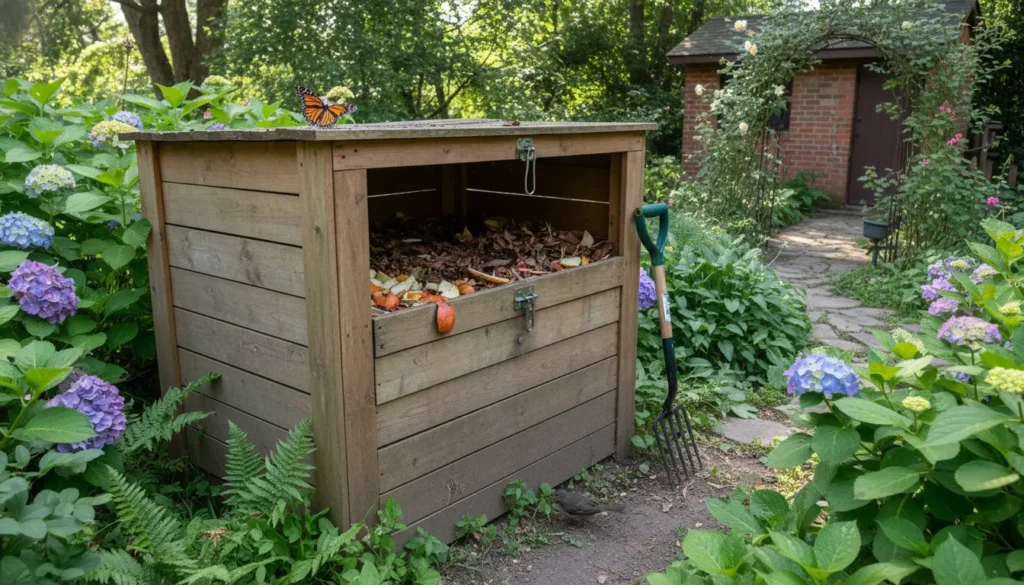
Pick a method that fits your space and schedule. Common options include a simple pile, a tumbling bin, or a worm (vermiculture) bin for small spaces.
Consider factors like odor control, maintenance time, and how quickly you want finished compost.
Common Compost Systems
- Compost pile: Low cost, good for large yards.
- Tumbler bin: Faster decomposition and easier turning.
- Worm bin: Best for indoor or small-space composting with consistent food scraps.
What to Compost at Home
Balance ‘greens’ (nitrogen) and ‘browns’ (carbon) for healthy decomposition. Green materials are wet and rich in nitrogen; browns are dry and carbon-rich.
Examples of Greens and Browns
- Greens: fruit and vegetable scraps, coffee grounds, fresh grass clippings.
- Browns: dry leaves, shredded newspaper, cardboard, straw.
Step-by-Step Home Composting Process
Follow simple steps to build and maintain a compost pile that decomposes efficiently. Each step keeps the pile active and prevents common problems.
- Choose a location: a well-drained, partly shaded spot close to your kitchen.
- Start a base: lay coarse browns like twigs to allow airflow at the bottom.
- Add layers: alternate thin layers of greens and browns, aiming for roughly a 1:2 ratio (greens to browns by volume).
- Moisture: keep the pile as damp as a wrung-out sponge; water if it becomes dry, cover if too wet.
- Turn: aerate the pile every 1–2 weeks by mixing or rotating a tumbler to speed up decomposition.
- Harvest: when material is dark, crumbly, and earthy-smelling, it’s ready to use in garden beds or potting mixes.
Troubleshooting: Common Home Composting Issues
Small problems are normal and easy to fix. Address issues quickly to keep the process on track.
Bad Odor
Cause: too many greens or poor aeration. Fix: add browns, turn the pile, and ensure airflow.
Pests
Cause: exposed food scraps or meat/dairy in the pile. Fix: avoid meat and dairy, bury scraps within the pile, or use a closed bin or tumbler.
Slow Decomposition
Cause: pile too dry, too large, or wrong balance. Fix: add water, chop materials into smaller pieces, and adjust greens/browns.
Composting can divert up to 30% of household waste from landfills and reduce methane emissions from anaerobic decomposition.
Practical Tips for Faster Home Composting
- Shred or chop materials to increase surface area and speed breakdown.
- Keep a kitchen scrap container with a lid to collect greens before transferring to the bin.
- Use a garden fork or compost aerator to turn and mix materials easily.
- Layer finished compost or soil between fresh layers to introduce beneficial microbes.
Small Real-World Example
Case Study: A two-person household in a small suburban yard started a 200-liter tumbler bin. They added kitchen scraps and yard waste in a roughly 1:2 green-to-brown ratio.
Within three months of regular turning and moisture checks, they produced usable compost. The household reduced weekly trash volume and used the compost to boost vegetable bed yields the following season.
Using Finished Compost at Home
Finished compost is versatile and safe for most garden uses. Mix it into vegetable beds, use as a top dressing for lawns, or blend with potting soil for container plants.
Start with a 1–2 inch layer worked into topsoil or add 10–30% compost to potting mixes for improved water retention and nutrients.
Summary: Start Simple and Improve Over Time
Home composting is flexible and scalable. Begin with a small bin or pile, learn the balance of greens and browns, and adjust practices as you gain experience.
With consistent turning, moisture control, and basic troubleshooting, most households can produce quality compost within months and reduce organic waste significantly.