Why an Indoor Herb Garden Works
Growing herbs indoors is practical for fresh flavors year-round and for people with limited outdoor space. Herbs are generally compact, fast-growing, and forgiving if you match light and water needs.
An indoor herb garden also reduces grocery costs and food waste. It gives immediate access to garnishes and cooking herbs while improving indoor air quality slightly.
How to Plan Your Indoor Herb Garden
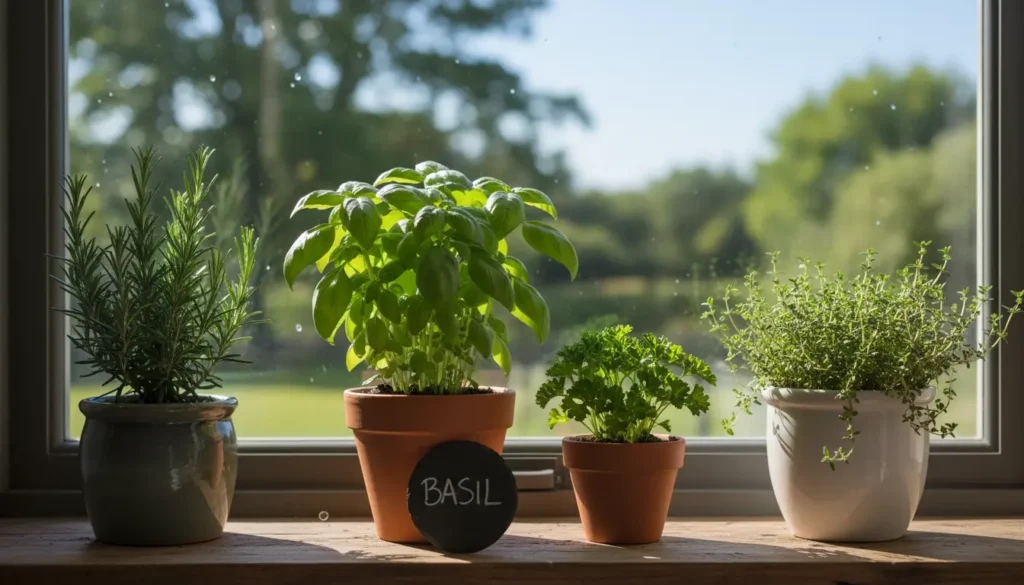
Decide how many herbs you want and where they will live. Start with a windowsill, a shelf with grow lights, or a small tiered planter for limited space.
Choose 4–6 herbs to begin with; this keeps maintenance simple and gives a varied set for cooking. Plan for similar light and water needs in each grouping.
Best Herbs for an Indoor Herb Garden
- Basil — needs bright light and warmth.
- Parsley — tolerates partial light and regular moisture.
- Mint — vigorous and prefers moist soil; keep in a separate pot.
- Chives — compact and good on windowsills.
- Thyme and rosemary — like bright light and well-draining soil.
Light and Location for Indoor Herb Garden
Light is the number one factor for success. Most culinary herbs need 6–8 hours of bright light or at least 4–6 hours of direct sun.
If you lack a sunny window, use a full-spectrum LED grow light placed 6–12 inches above the plants. Timers help maintain consistent light cycles.
Light Checklist
- South or southwest windows provide the most natural sun.
- East windows work for moderate-light herbs like parsley.
- Supplement with grow lights when natural light is insufficient.
Soil and Containers for an Indoor Herb Garden
Use a loose, well-draining potting mix designed for indoor plants or herbs. Avoid garden soil that compacts and holds too much moisture.
Containers need drainage holes. If you use a decorative pot without holes, place the herb pot inside it and remove the outer pot to water.
Container Tips
- Choose pots 4–8 inches wide for most herbs.
- Use clay pots to help soil dry more evenly for Mediterranean herbs.
- Label pots so you remember care differences between plants.
Watering, Feeding, and Care
Check soil moisture with your finger; water when the top inch feels dry for most herbs. Overwatering is the most common indoor mistake.
Feed herbs with a balanced, water-soluble fertilizer every 4–6 weeks in active growth. Reduce feeding in winter when growth slows.
Routine Care Tasks
- Rotate pots weekly for even growth.
- Pinch back flowers to encourage leaf growth on culinary herbs.
- Trim regularly to keep plants compact and productive.
Many herbs like basil and mint produce more aromatic oils when slightly stressed by slightly drier conditions between waterings. Controlled stress can increase flavor.
Common Problems and Solutions for Indoor Herb Garden
Yellow leaves often mean overwatering or poor drainage. Move the pot to a brighter spot and check drainage. Repot if the soil is waterlogged.
Leggy growth indicates too little light. Move the herb to brighter light and pinch back long stems to promote bushier growth.
Pest Management
- Inspect leaves weekly for aphids, spider mites, or whiteflies.
- Use a mild soap spray or neem oil for small infestations.
- Quarantine new plants for two weeks before adding them to your collection.
Harvesting and Using Herbs from an Indoor Herb Garden
Harvest in the morning after dew evaporates for best flavor. Regular harvesting encourages new growth and prevents bolting.
Harvest no more than one-third of the plant at a time. For basil, snip just above a leaf node to stimulate branching.
Small Real-World Example
Case Study: Sarah, a city renter, started with three pots of basil, chives, and mint on her east-facing kitchen sill. She used a lightweight potting mix and water-soluble fertilizer monthly.
Within six weeks, basil produced enough leaves for weekly pesto, chives for salads, and mint for teas. She solved a leggy basil issue by adding a small LED grow light and pinching tips weekly.
Quick Start Checklist for an Indoor Herb Garden
- Pick 3–6 compatible herbs to begin.
- Choose a bright location or add a grow light.
- Use well-draining potting mix and pots with drainage holes.
- Water when the top inch of soil is dry and feed monthly in growing season.
- Inspect plants weekly and harvest regularly.
Starting an indoor herb garden is low-cost and highly rewarding. With a clear plan for light, soil, and simple care, you can enjoy fresh flavors and a productive kitchen garden year-round.