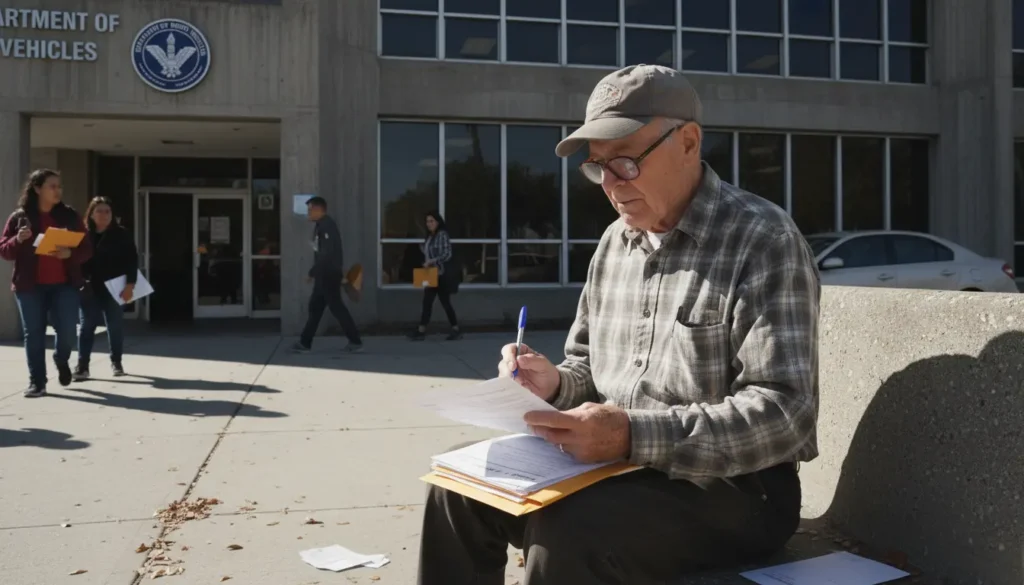
The federal guidance announced for Nov 2025 creates changes in state processes that will affect many drivers aged 70 and older. This article explains the New U.S. Driving License Rule for Seniors Starts Nov 2025 and lays out steps you can take now to prepare.
New U.S. Driving License Rule for Seniors Starts Nov 2025: What it Means
The rule sets new minimum standards for state motor vehicle departments to use when renewing licenses for older drivers. States will still manage their own procedures but must align with the new baseline requirements.
Key changes include clearer medical reporting guidelines, optional in-person vision and cognitive checks, and shorter renewal windows for drivers 70 and older in some states. Expect variation by state; not every change will look the same across the country.
Impact on Drivers 70+: Who needs to act
If you are 70 or older and your license renewal falls on or after November 1, 2025, your state may require extra documentation or testing. Drivers with recent medical changes or a history of crashes may see more frequent checks.
Routine renewals for drivers 70+ could involve:
- Updated medical self-certification forms
- Optional in-person vision screenings
- Possible brief cognitive assessments or referral to a physician
- Shorter renewal windows or more frequent renewals depending on state rules
How States Will Implement the New U.S. Driving License Rule for Seniors Starts Nov 2025
Federal guidance requires states to adopt minimum standards but leaves enforcement to them. Expect state DMV websites to publish updated checklists by mid-2025.
States may use a mix of remote and in-person options. Some will require a visit to renew; others will allow online renewal if medical information is unchanged.
Documents and evidence most commonly requested
- Valid ID and current driver’s license
- Completed medical self-certification or physician report if requested
- Proof of residency in the state
- Recent vision test results if not done at the DMV
Practical Steps for Drivers 70+ Before Nov 2025
Prepare early to avoid surprises. Start by checking your state DMV website for specific requirements and the latest forms.
Steps to take now:
- Locate your license renewal date and mark it on your calendar.
- Ask your primary care physician for a copy of any recent medical reports that affect driving.
- Schedule a vision test if you wear corrective lenses or have recent vision changes.
- Consider taking a free or low-cost senior driving assessment at a local community center.
If you have medical changes
If you experience new balance problems memory lapses sudden vision loss or a stroke inform your doctor and your DMV. Under the new rule states may require a physician report before renewal.
Acting early can prevent license suspension and help you get the right accommodations or therapies to continue driving safely.
Cost and Time Considerations Under the New U.S. Driving License Rule for Seniors Starts Nov 2025
Costs will vary by state. Some states may add fees for in-person testing or physician reports. Plan for modest additional expenses and extra time at the DMV if required.
Typical cost drivers:
- Vision or cognitive screening fees (often under $50)
- Physician evaluation or specialist visit if requested (varies widely)
- DMV renewal fees and possible appointment fees
Timing tips
Renew early when permitted to avoid last-minute appointments. Book DMV appointments in advance and bring all paperwork to reduce repeat visits.
Case Study: How One Driver Prepared
Example: Mary, 74, lives in Ohio and had a renewal scheduled for December 2025. She reviewed her state DMV site in July 2025 and found Ohio required a vision check if renewing in person.
Mary did three things: she asked her optometrist for a written vision test, printed the DMV checklist, and booked an early appointment. At renewal she handed in the vision results and completed the form without delays. The extra steps saved her time and stress.
Alternatives and Support For Drivers 70+
If driving ability is changing consider alternatives before giving up the license. Many communities offer senior transport programs and rideshare discounts for older adults.
Resources to explore:
- Local Area Agency on Aging for transport services
- Senior centers offering driving refresher courses
- Nonprofit programs that assess safe driving and recommend vehicle adaptations
When to talk to family or a doctor
Discuss driving with family if you notice frequent close calls or difficulty with signs and turns. Your doctor can recommend rehabilitation or refer you for driving evaluations.
Under the new guidance many states may allow vision screening at a local optometrist to count toward DMV requirements. This can often speed the renewal process and avoid DMV wait times.
Final Checklist Before Your Renewal Under the New U.S. Driving License Rule for Seniors Starts Nov 2025
- Check your state DMV updates for Nov 2025 changes
- Gather medical records and vision test results
- Book DMV appointments early if in-person visits are required
- Talk to your doctor about any new medical concerns
- Explore local transport alternatives in case of restricted driving
The new rule aims to balance safety with independence for older drivers. Preparing early and staying informed about state-specific implementation will make the renewal process smoother for drivers aged 70 and over.