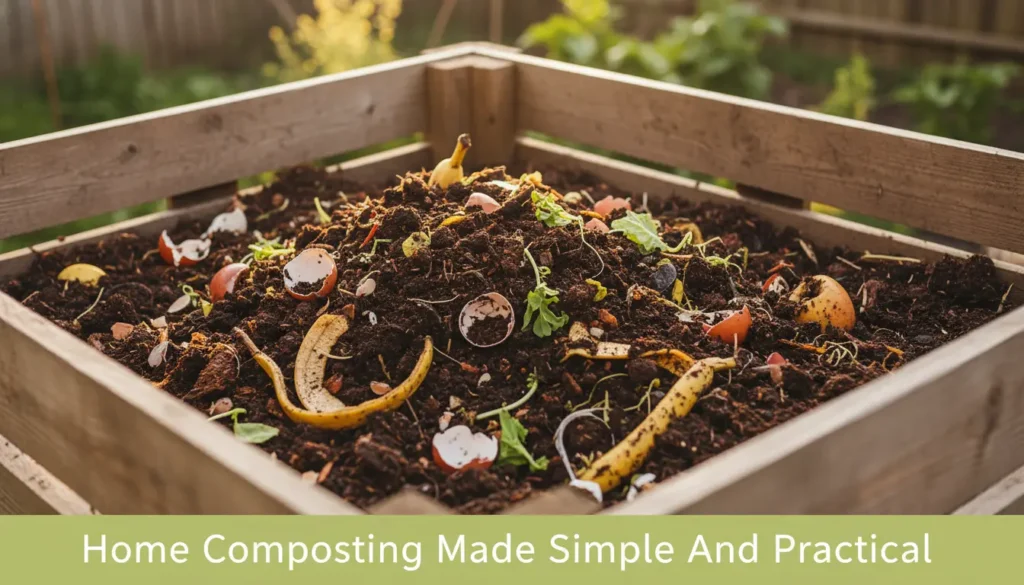
Composting at home turns kitchen scraps and yard waste into valuable soil amendment. This guide explains simple, practical steps you can follow this week to start composting successfully.
Why composting at home matters
Composting reduces landfill waste and returns nutrients to the soil. It improves soil structure, water retention, and plant health without chemical fertilizers.
For homeowners and renters with outdoor space, composting is a low-cost way to support a healthy garden and lower household waste.
How to start composting at home
Starting is easier than many expect. Pick a method, gather materials, and maintain the pile—three basic steps that get results fast.
Choose a composting method
Select the method that fits your space, time, and comfort level. Here are common options:
- Cold pile: Low effort, slow breakdown. Add materials as available and wait months to years.
- Hot composting: Active management to reach higher temperatures and finish compost in weeks to months.
- Compost bin or tumbler: Contained, neater, and easier for small yards or patios.
- Vermicomposting: Worm bins indoors or on balconies for kitchen scraps and fast, rich compost.
What to put in your compost
Balance ‘greens’ (nitrogen) and ‘browns’ (carbon). Good mixes speed decomposition and reduce odor.
- Greens: vegetable scraps, fruit peels, coffee grounds, fresh grass clippings.
- Browns: dry leaves, shredded paper, cardboard, straw, small wood chips.
- Avoid: meat, dairy, oily foods, diseased plants, pet waste, and large woody branches.
How to maintain composting at home
Maintenance depends on the method. Basic care focuses on moisture, aeration, and particle size.
Simple maintenance steps
- Turn or mix: Aerate your pile every 1–2 weeks for hot compost, or every month for bins.
- Moisture: Keep it as damp as a wrung-out sponge. Add water or browns to adjust.
- Size: Chop large items so they break down faster. Smaller pieces heat and decompose more quickly.
Troubleshooting common problems
If the pile smells bad, add more browns and turn it to introduce air. Smells usually mean too much moisture or too many greens.
If decomposition is slow, increase greens, chop materials finer, and warm the pile by combining materials correctly. Cold piles may simply need more time.
Tools and materials for composting at home
Start with a few basic items that make the process easier and cleaner.
- Compost bin or tumbler (or a defined area for a simple pile).
- Pitchfork or aerator tool for turning.
- Garden shears or a shredder to cut large items.
- Thermometer for hot composting (optional).
Small real-world example: Backyard bin case study
Maria, a homeowner with a small backyard, started a 3-bin system to compost kitchen scraps and yard trimmings. She layered browns and greens, turned each bin weekly, and kept the piles moist.
In six months, Maria had rich, dark compost that she mixed into vegetable beds. Her tomato yields improved, and her weekly trash volume dropped noticeably.
Key takeaways from her case: regular turning, proper moisture, and layering created usable compost in a single growing season.
How to use finished compost
Finished compost is dark, crumbly, and smells earthy. Use it to improve garden beds, potting mixes, and lawn topdressing.
- Mix 1–3 inches of compost into garden beds before planting.
- Top-dress lawns with a thin layer to improve soil structure.
- Blend compost into potting soil at roughly 1 part compost to 3 parts soil for container plants.
Quick checklist for composting at home
- Choose a method: cold pile, hot pile, bin, tumbler, or worm bin.
- Balance greens and browns for steady decomposition.
- Keep moisture like a wrung-out sponge.
- Turn regularly to add oxygen and speed breakdown.
- Harvest finished compost when it is dark and crumbly.
Composting at home is a practical way to reduce waste and build healthier soil. Start small, observe the pile, and adjust based on basic rules—most beginners see good results within months.