How to Start a Vegetable Garden: Overview
Starting a vegetable garden is a practical way to grow fresh food and learn new skills. This guide breaks the process into clear steps you can follow, whether you have a backyard or a small balcony.
Choose the Right Location to Start a Vegetable Garden
Your garden location determines future success. Pick a spot that gets at least 6 hours of sunlight per day and has good drainage.
Consider these site factors:
- Sun exposure: Full sun is best for most vegetables.
- Water access: Place beds near a water source to save time and effort.
- Wind protection: Use fences or hedges if wind is strong.
How to Start a Vegetable Garden: Choose Bed Type
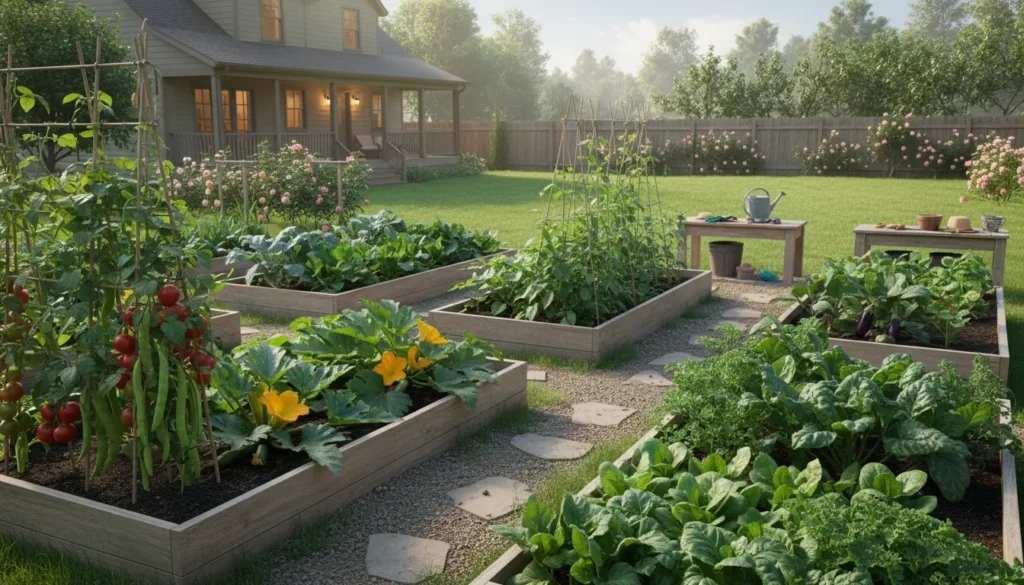
Decide between in-ground beds, raised beds, or containers based on space and soil quality. Raised beds warm faster in spring and reduce compaction.
Examples of common setups:
- In-ground rows for large yards.
- Raised beds for better drainage and soil control.
- Containers for balconies and patios.
Prepare Soil When You Start a Vegetable Garden
Soil quality is the most important factor for healthy plants. Test soil pH and amend based on results to create a balanced environment.
Steps to prepare soil:
- Remove weeds and debris from the planting area.
- Loosen soil to a depth of 8–12 inches for most vegetables.
- Add compost or well-rotted manure to boost organic matter.
How to Start a Vegetable Garden: Soil Tests and Amendments
A simple soil test reveals pH and nutrient levels. Most vegetables prefer pH 6.0–7.0. Use lime to raise pH or sulfur to lower pH if needed.
Common amendments:
- Compost: Improves structure and fertility.
- Bone meal or rock phosphate: For phosphorus when needed.
- Balanced fertilizer: Use according to test recommendations.
Plan What to Plant: Crops and Timing
Choose crops suited to your climate and season. Start with easy vegetables like lettuce, radishes, tomatoes, and bush beans.
Create a planting calendar based on your last frost date. This helps time direct sowing and transplanting.
How to Start a Vegetable Garden: Companion Planting and Rotation
Use companion planting to reduce pests and improve yields. Rotate families of vegetables each year to prevent soil-borne diseases.
Simple rotation plan:
- Year 1: Leafy greens and brassicas
- Year 2: Roots and legumes
- Year 3: Fruiting crops like tomatoes and peppers
Planting and Early Care
Follow seed packet or transplant instructions for spacing and depth. Water gently but deeply at planting to establish roots.
Mulch around plants to retain moisture and suppress weeds. Organic mulches like straw or shredded leaves are effective and add organic matter as they break down.
How to Start a Vegetable Garden: Watering and Fertilizing
Water consistently, aiming for 1–1.5 inches per week depending on weather. Use drip irrigation or soaker hoses to reduce leaf wetness and disease.
Fertilize lightly during the season, especially for heavy feeders like tomatoes and corn. Monitor plants for nutrient deficiencies like yellowing leaves.
Maintenance and Pest Management
Regular tasks keep your garden productive. Spend 10–15 minutes a few times a week weeding, checking for pests, and harvesting ripe produce.
Integrated pest management (IPM) strategies work well: monitor, use physical barriers, encourage beneficial insects, and apply organic controls only when needed.
How to Start a Vegetable Garden: Common Problems and Solutions
Common issues include nutrient deficiencies, fungal diseases, and insect pests. Early detection and simple remedies often prevent severe damage.
Quick fixes:
- Yellow leaves: Check for nitrogen deficiency and soil compaction.
- Powdery mildew: Improve air circulation and remove affected leaves.
- Aphids: Spray water or introduce ladybugs.
Mulching can reduce watering needs by up to 70% and adds valuable organic matter to the soil as it breaks down.
Small Real-World Example
Sara, a beginner gardener in a small suburban yard, started with two 4×8 foot raised beds. She chose tomatoes, lettuce, and bush beans for the first season.
By testing soil and adding compost, following a simple planting calendar, and using a soaker hose, she produced reliable harvests and reduced weed time to 20 minutes a week. Her initial investment in soil and tools paid off by mid-summer when she had fresh salads from her yard.
Summary: Next Steps to Start Your Vegetable Garden
To start a vegetable garden, choose a sunny site, prepare good soil, pick suitable crops, and maintain consistent care. Small, regular efforts lead to steady improvements and larger yields over time.
Checklist to get started:
- Identify a sunny location and measure available space.
- Test soil and add compost or other amendments.
- Choose easy crops and create a planting schedule.
- Install simple irrigation and apply mulch.
- Monitor, weed, and harvest regularly.
Following these steps will help you build confidence and success in growing your own vegetables. Start small, learn from each season, and expand as you gain experience.