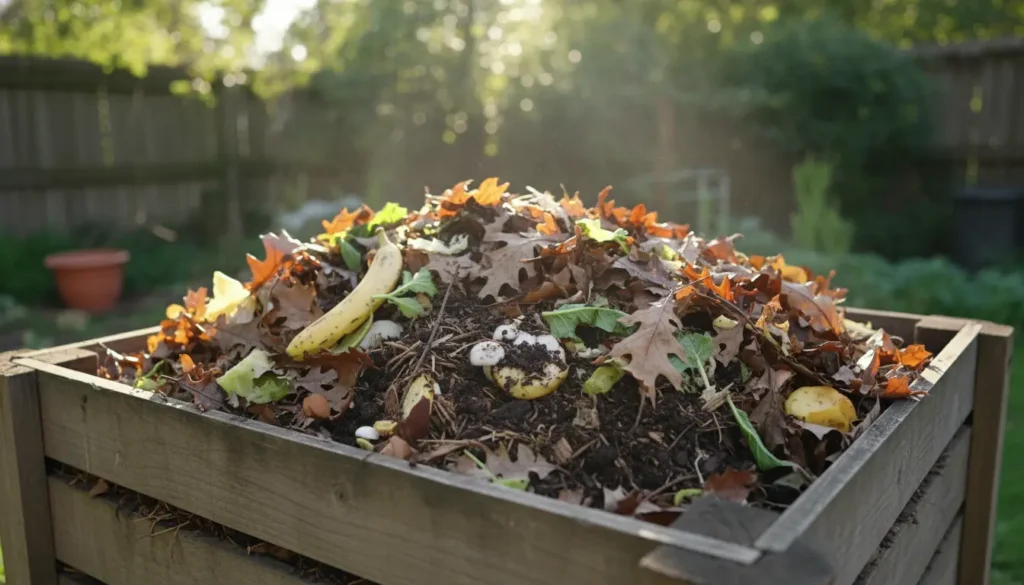
Composting turns kitchen scraps and yard waste into rich soil you can use in pots and garden beds. For beginners, the process can seem technical, but a simple bin and basic routine are enough to get results.
Home Composting for Beginners: Choosing a Method
Decide which composting method fits your living situation. Options include a backyard bin, tumbler, worm composting (vermicompost), or a small indoor bokashi system. Each method has trade-offs in space, speed, and odor control.
Selecting the right compost system
- Backyard bin: Low cost, good for yard waste, needs space and some turning.
- Compost tumbler: Faster breakdown, easier to turn, more expensive.
- Vermicompost (worms): Great for apartments, handles food scraps well, requires indoor care.
- Bokashi: Fermentation-based, good for small kitchens, works with a wider range of scraps including meat.
What to Compost: The Basic Rules
Compost ingredients fall into two groups: greens and browns. Balancing both helps microbes break material down efficiently.
Greens (Nitrogen-rich)
- Vegetable and fruit scraps
- Fresh grass clippings
- Coffee grounds and tea leaves
Browns (Carbon-rich)
- Dry leaves and straw
- Shredded paper and cardboard (uncoated)
- Wood chips and sawdust (small amounts)
A simple guideline: aim for roughly 2–3 parts browns to 1 part greens by volume. If the pile smells, add more browns. If it’s dry and slow, add more greens and some water.
Step-by-Step Setup for Home Composting
Follow these steps to start a basic backyard or bin compost system. This routine works for most beginners and keeps maintenance low.
- Choose a location: partial shade and good drainage work best.
- Create a base: layer coarse materials like twigs or straw to help airflow.
- Add materials: begin with alternating layers of greens and browns.
- Maintain moisture: the pile should feel like a wrung-out sponge.
- Turn regularly: every 1–2 weeks for faster compost, or every month for low-maintenance piles.
Maintenance and Troubleshooting
Routine checks prevent common problems. A few simple adjustments fix most issues quickly.
Common problems and fixes
- Bad smell: add browns and turn the pile to add air.
- Too dry: sprinkle water and mix, add fresh greens.
- Slow decomposition: chop larger pieces, increase turning, or add a nitrogen source like grass clippings.
- Pests: avoid adding meat, dairy, or oily foods; use a closed bin or bury kitchen scraps deeper in the pile.
Harvesting and Using Finished Compost
Compost is ready when it looks dark, crumbly, and smells earthy. This can take 2–12 months depending on method and care.
Use finished compost as:
- Soil amendment mixed into garden beds (10–25% by volume)
- Top dressing for lawns or potted plants
- Seed-starting mix component (lightly blended with potting soil)
One pound of kitchen scraps can produce roughly one quart of finished compost. Regular composting can reduce household waste by up to 30 percent.
Small Case Study: Apartment Composting Success
Case: Mia, a two-bedroom apartment dweller, started vermicomposting in a 10-liter bin under her sink. She added shredded cardboard, vegetable scraps, and a small handful of garden worms.
Within three months she produced enough compost to top-dress her balcony pots. By keeping a small airtight kitchen caddy and burying new scraps, she avoided odors and pests. The system reduced her weekly trash volume by about half.
Tips for Home Composting for Beginners
Small habits make composting easier and more reliable. Use these practical tips to stay consistent.
- Collect scraps in a sealed container to prevent smells between transfers.
- Chop or shred larger items to speed decomposition.
- Layer materials rather than adding large single-type piles.
- Keep a simple log: note turning dates and any issues to learn what works.
- Use finished compost within a few months for best nutrient value.
Final Checklist for Beginners
Before you start, make sure you have the basics on hand. This quick checklist reduces mistakes and delays.
- Compost bin or container suited to your space
- Source of browns (dry leaves or shredded paper)
- Small garden fork or hand tool for turning
- Kitchen caddy for collecting scraps
- Water source nearby for moisture control
Home composting for beginners is about consistency more than perfection. Start small, learn from a few cycles, and adjust the mix and turning frequency to suit your climate and materials. Over time you’ll produce richer compost and cut household waste effectively.