How to Start a Vegetable Garden: Overview
Starting a vegetable garden is a practical way to grow fresh food and learn plant care. This guide explains the key steps to plan, plant, and maintain a productive garden.
Plan Before You Plant: How to Start a Vegetable Garden
Good results begin with planning. Decide what you want to grow, how much time you can spend, and where the garden will go.
Choose Your Location to Start a Vegetable Garden
Pick a spot with at least 6 hours of direct sunlight for most vegetables. Ensure easy access to water and good drainage to avoid soggy soil.
Decide Garden Type
Common options include in-ground beds, raised beds, and containers. Raised beds warm faster and drain well; containers are best for patios or limited space.
Prepare Soil and Tools
Healthy soil is the foundation of a productive garden. Test soil if possible and amend with compost to improve texture and fertility.
- Essential tools: spade, hand trowel, rake, watering can or hose, and gloves.
- Soil needs: loamy texture, pH near 6.0–7.0, and plenty of organic matter.
- Amendments: compost, well-rotted manure, and a balanced organic fertilizer if needed.
What to Plant First When You Start a Vegetable Garden
Begin with easy, fast-maturing vegetables to build confidence. Choose varieties that match your climate and growing season length.
Beginner-Friendly Vegetables
- Lettuce and salad greens — quick harvest and continuous picking.
- Radishes — very fast, often ready in 3–4 weeks.
- Tomatoes and peppers — slightly more care but high reward in warm climates.
- Beans and peas — low maintenance and good soil improvers.
Planting Steps to Start a Vegetable Garden
Follow a simple sequence: prepare beds, sow or transplant, mulch, and water. Use seed packets or plant labels for spacing and depth guidance.
- Clear weeds and loosen soil to at least 8–12 inches for most vegetables.
- Work in 2–4 inches of compost and level the bed.
- Sow seeds or transplant seedlings at the recommended depth and spacing.
- Mulch with straw or shredded bark to suppress weeds and retain moisture.
Watering and Feeding Your New Vegetable Garden
Consistent moisture is crucial for seed germination and steady growth. Water deeply and less frequently to encourage strong root systems.
- Water early in the morning to reduce evaporation and disease risk.
- Use drip irrigation or soaker hoses for efficient delivery to roots.
- Fertilize based on plant needs: leafy greens need more nitrogen, while fruiting crops benefit from phosphorus and potassium.
Pest and Disease Basics for a Vegetable Garden
Preventive measures reduce problems later. Healthy soil and good spacing lower disease pressure and make plants more resilient.
Simple Pest Management
- Handpick large pests like slugs and caterpillars.
- Use row covers to protect young plants from insects and birds.
- Encourage beneficial insects such as ladybugs and lacewings by planting flowers like marigolds and dill.
Harvesting and Rotation
Harvest regularly to encourage production, and remove spent plants promptly. Plan crop rotation to avoid pest buildup and nutrient depletion.
- Rotate families: brassicas, legumes, nightshades, and root crops in different beds each year.
- Succession plant: sow seeds every few weeks for a continuous supply.
Companion planting, like pairing tomatoes with basil, can improve flavor and deter pests naturally. Some combinations also boost pollination and yield.
Small Case Study: A 10×4 Raised Bed
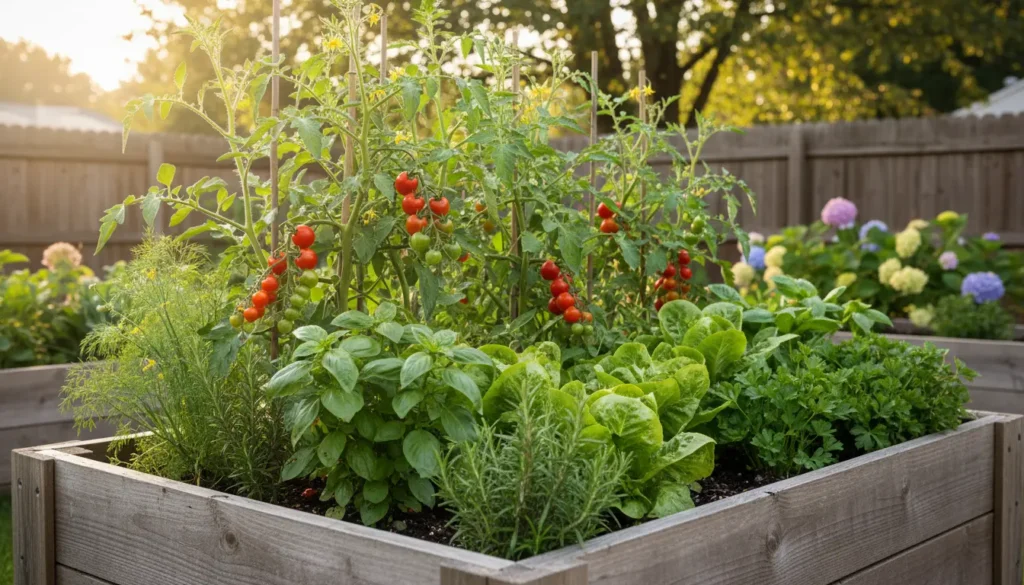
Maria started a 10×4 ft raised bed in her suburban backyard. She added 3 inches of compost and planted tomatoes, lettuce, and bush beans in spring.
By mid-summer she harvested weekly salads and several pounds of tomatoes. Simple irrigation and weekly checks for pests kept maintenance under an hour per week.
Quick Checklist to Start a Vegetable Garden
- Choose a sunny location and decide bed type.
- Test and amend soil, add compost.
- Select beginner-friendly crops for your climate.
- Plant, mulch, and set up efficient watering.
- Monitor pests, rotate crops, and harvest regularly.
Resources and Next Steps
Local extension services and seed catalogs provide region-specific planting dates and variety recommendations. Start small and expand in the second season.
Keeping a simple garden journal with planting dates, varieties, and harvest yields helps improve results each year.