Why Start a Home Vegetable Garden
Starting a home vegetable garden gives you fresh food, saves money, and connects you to your local season. It can be scaled to a balcony box or multiple raised beds.
This guide explains practical steps to plan, plant, and maintain a productive garden even if you are a beginner.
Plan Your Home Vegetable Garden
Before you begin, choose the right location and size. A good site has 6 to 8 hours of sunlight, access to water, and decent drainage.
Decide between containers, raised beds, or in-ground rows based on space and budget.
Choose Vegetables for Beginners
- Leafy greens: lettuce, Swiss chard, spinach
- Root crops: radishes, carrots (short varieties)
- Fruiting plants: cherry tomatoes, peppers (small varieties)
- Quick crops: bush beans, peas
Starting a Home Vegetable Garden: Prepare the Soil
Healthy soil is the foundation. Test soil pH with a simple kit and aim for 6.0–7.0 for most vegetables.
Improve poor soil by adding compost, well-rotted manure, or a balanced organic fertilizer.
Soil Preparation Steps
- Clear weeds and grass from the chosen area.
- Loosen soil to about 8–12 inches in raised beds; deeper for in-ground planting.
- Mix in 2–3 inches of compost and a handful of balanced fertilizer per square foot.
Planting and Spacing Tips for a Home Vegetable Garden
Follow seed packet or plant tag instructions for depth and spacing. Proper spacing reduces disease and improves yields.
Use succession planting to harvest continuously — sow quick crops every 2–3 weeks.
Examples of Simple Planting Plans
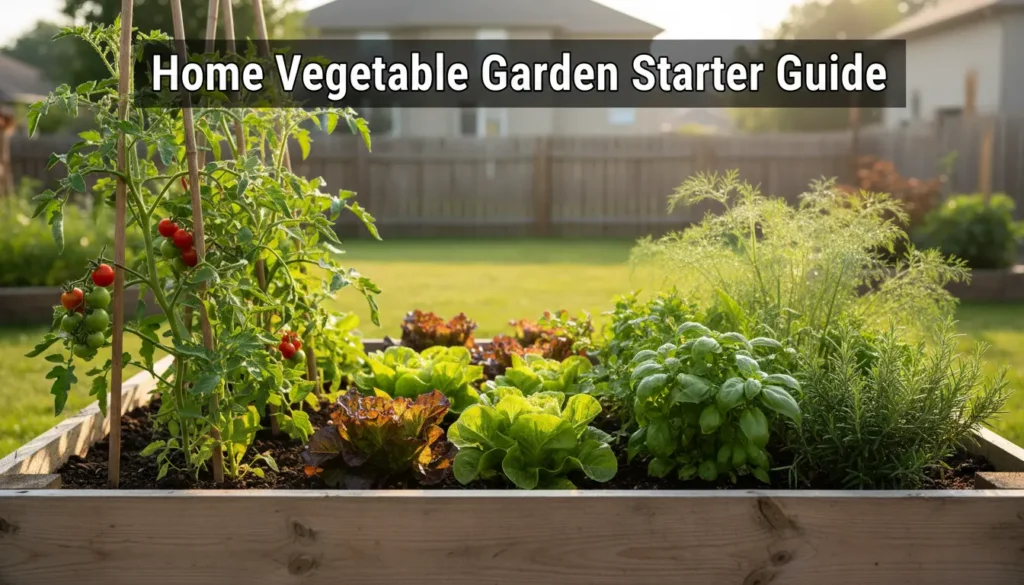
- One raised bed (4×4 ft): lettuce in front, tomatoes in back, bush beans in middle.
- Containers: one tomato per 5-gallon pot, herbs in small pots on a sunny ledge.
Watering and Maintenance
Water deeply and less frequently to encourage deep roots. Aim for consistent moisture, especially for fruiting plants like tomatoes.
Mulch with straw or shredded leaves to retain moisture and suppress weeds.
Pest and Disease Management
- Inspect plants weekly for pests and remove by hand when possible.
- Use row covers early in the season to protect seedlings from insects.
- Rotate crops each year to reduce soil-borne diseases.
Plants grown in well-composted soil can produce up to 50% more food than those in poor soil, because compost improves soil structure, nutrients, and water retention.
Harvesting and Storing
Harvest leafy greens when young for best flavor. Pick tomatoes and peppers at full color for peak taste.
Store root vegetables in a cool, dark place and use or preserve excess produce by freezing or canning.
Small Case Study: Maria’s First Season
Maria, a beginner with a 4×4 raised bed, followed a simple plan: tomatoes, lettuce, bush beans, and basil. She improved her soil with three wheelbarrows of compost before planting.
By mid-summer she harvested enough salad greens weekly and had a steady supply of cherry tomatoes. Mulching reduced her watering frequency and kept weeds low.
Key wins: starting small, choosing easy crops, and improving soil first.
Troubleshooting Common Problems
Yellow leaves may indicate nutrient deficiency or overwatering. Check soil moisture and add compost or a balanced fertilizer if needed.
Stunted growth can be caused by compacted soil or pests; loosen soil gently and inspect roots.
Quick Checklist for a Successful Home Vegetable Garden
- Site: 6–8 hours sun and watering access
- Soil: test and add compost
- Plants: choose beginner-friendly varieties
- Water: deep, consistent watering and mulch
- Maintenance: weekly checks for pests and diseases
Next Steps for Starting a Home Vegetable Garden
Start with one or two beds or containers this season. Track what works, and expand next year based on your harvest and time.
Join a local gardening group or online forum to get season-specific tips and seed swap opportunities.
With basic planning, improved soil, and routine care, starting a home vegetable garden can be rewarding and productive within a single growing season. Begin small, learn, and enjoy the harvest.