Why Choose Home Composting for Beginners
Home composting turns food scraps and yard waste into valuable soil amendment. It reduces household waste and improves garden health without chemical fertilizers.
This guide gives clear, practical steps so beginners can start composting with minimal tools and space.
Basic Composting Principles for Beginners
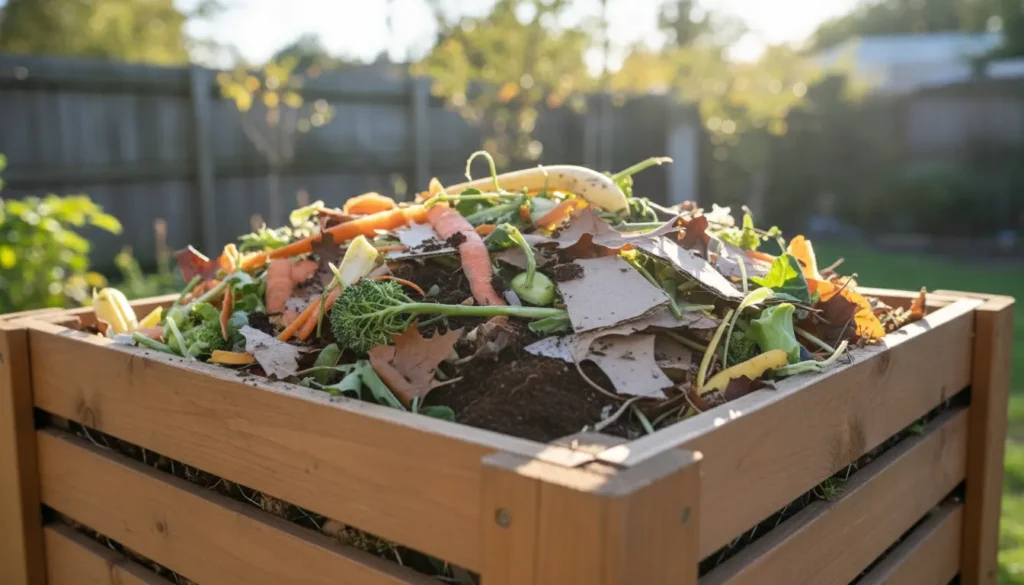
Compost is a balance of carbon rich materials (browns) and nitrogen rich materials (greens). Microbes break these down over time to produce dark, crumbly humus.
Key factors are the right mix, moisture, air, and time. Control these to keep the pile active and avoid odors.
What to Use and What to Avoid
- Browns (carbon): dry leaves, straw, shredded paper, cardboard.
- Greens (nitrogen): vegetable scraps, coffee grounds, fresh grass clippings.
- Avoid: meat, dairy, oily foods, diseased plants, pet waste (risk of pests and pathogens).
How to Start Home Composting for Beginners
Choose a method that fits your space and lifestyle: a simple pile, a stationary bin, a tumbling composter, vermicompost (worms), or bokashi for small kitchens.
Follow these steps to start a basic backyard bin:
- Pick a shady, well-drained spot near a water source or use a container on a balcony.
- Build a base layer of coarse browns like small branches for air flow.
- Add alternating layers: 2–3 inches of greens, then 2–4 inches of browns.
- Keep the pile moist like a wrung-out sponge; add water if dry or cover if too wet.
- Turn the pile every 1–2 weeks to add oxygen and speed decomposition.
Simple Equipment List
- Compost bin or wire mesh (or a plastic tote with holes).
- Pitchfork or compost aerator for turning.
- Kitchen caddy for scraps (lined and emptied regularly).
Managing Moisture and Temperature
Moisture around 40–60% and internal temperatures between 90–140°F (32–60°C) work well for hot composting. If you want slow cold composting, temperatures will be lower but still effective.
If the pile smells sour, it is likely too wet or compacted. Add browns and turn it. If decomposition is slow, add greens and keep it moist.
Troubleshooting Common Home Composting Issues
Beginner composters often face a few common problems. Use small adjustments rather than overhauls.
Problem: Bad Odor
Cause: Too much wet nitrogen or lack of oxygen. Fix: Turn the pile and add dry browns like shredded cardboard.
Problem: Fruit Flies or Pests
Cause: Exposed food scraps or meat/dairy. Fix: Bury food scraps under a layer of browns, use a sealed bin, or switch to bokashi/indoor worm bin for kitchens.
Problem: Slow Decomposition
Cause: Pile too small, too dry, or lacks nitrogen. Fix: Add green material, water, or increase pile size to retain heat.
Using Finished Compost
Finished compost is dark, crumbly, and earthy-smelling. Use it to: top-dress lawns, mix into garden beds, potting mixes, or make compost tea for seedlings.
Apply a 1–3 inch layer to beds or mix 20–30% compost into potting soil for better structure and nutrients.
Small Real-World Example
Case Study: Apartment Worm Bin in Seattle
Maria, a renter with a small balcony, started a worm bin with red wigglers and a 10-gallon tote. She collected about one cup of food scraps daily and layered them with shredded cardboard.
After three months of steady feeding and occasional maintenance, she harvested rich vermicompost used for potted herbs. The system produced minimal odor and eliminated most of her kitchen waste.
Tips for Long-Term Success
- Keep a sturdy balance of browns and greens; aim for roughly 3:1 carbon to nitrogen by volume.
- Chop or shred larger items to speed decomposition.
- Monitor and adjust moisture and aeration rather than changing methods frequently.
- Use kitchen liners for easy transport of scraps and rinse before composting to avoid excessive moisture.
Final Checklist for Home Composting for Beginners
- Select bin type that suits space and odor tolerance.
- Maintain layers and moisture; turn regularly.
- Exclude problem items like meat and pet waste.
- Harvest finished compost and use it to improve soil.
Starting simple and watching how your pile behaves are the best ways to learn. With a few basic practices, anyone can turn kitchen scraps into valuable compost and support healthier plants and a smaller household waste footprint.