Home Composting for Beginners: Why Compost at Home
Composting turns kitchen and yard waste into a useful soil amendment. It reduces landfill waste and improves your garden soil naturally.
Home Composting for Beginners: Choose Your Compost System
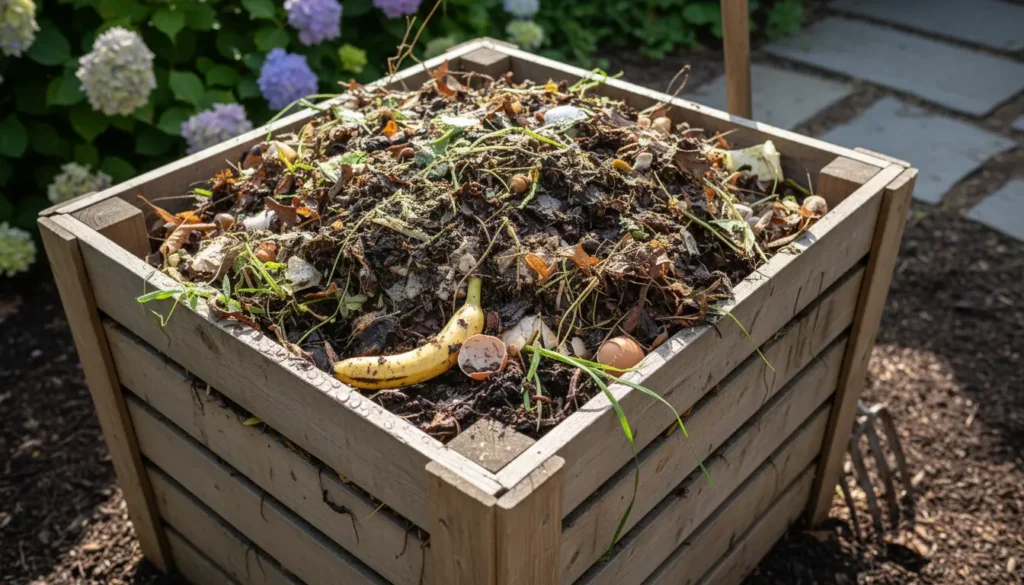
Decide on a method that fits your space and time. Common options include a simple pile, a turned bin, a tumbler, or a worm bin for small spaces.
Home Composting for Beginners: System pros and cons
- Open pile: Low cost, requires space and occasional turning.
- Enclosed bin: Neater and reduces pests, needs turning and airflow.
- Tumbler: Faster and easy to turn, typically more expensive.
- Vermicompost (worms): Works indoors or small patios, great for kitchen scraps.
Home Composting for Beginners: What to Compost
Balance carbon rich (brown) and nitrogen rich (green) materials for efficient breakdown. Aim for roughly 3 parts brown to 1 part green.
- Browns: Dry leaves, shredded cardboard, straw, paper.
- Greens: Vegetable scraps, coffee grounds, fresh grass clippings.
- Do not add: Meat, dairy, oily foods, diseased plants, or pet waste.
Home Composting for Beginners: Examples of good mixes
Mix a handful of shredded paper with a bucket of vegetable scraps and a layer of dry leaves. Add garden trimmings in thin layers to maintain airflow.
Home Composting for Beginners: Start and Maintain Your Bin
Location matters. Place your bin in a partly shaded, level spot with good drainage. This keeps moisture and temperature steady.
Basic steps to build and maintain compost:
- Layer a base of coarse material like small twigs to improve airflow.
- Add alternating layers of greens and browns.
- Keep compost moist like a wrung-out sponge; water if it gets dry.
- Turn the pile every 1–2 weeks to speed breakdown and prevent odor.
Home Composting for Beginners: Monitoring progress
Compost temperature and smell are quick indicators. A warm, earthy smell and internal heat mean active decomposition. If it smells rotten, add more browns and turn the pile.
Home Composting for Beginners: Troubleshooting Common Problems
Problems are usually simple to fix. Identify the issue and adjust moisture, aeration, or material balance.
- Smelly compost: Too wet or too many greens. Add dry browns and turn the pile.
- Pests: Avoid adding meat or oily food. Use a closed bin and bury food scraps in the center.
- Slow breakdown: Your pile may be too small, too dry, or lack nitrogen. Add green materials and keep it moist.
Home Composting for Beginners: How Long Until Compost is Ready?
Finished compost can take from 2 months to a year depending on method, materials, and how often you turn the pile. Finer materials and frequent turning speed the process.
Home Composting for Beginners: How to tell if compost is finished
- Dark, crumbly texture similar to soil.
- Earthy smell, not sour or rotten.
- Original materials mostly unrecognizable.
Home Composting for Beginners: Using Finished Compost
Use finished compost to improve soil structure, retain moisture, and boost nutrients. Mix into garden beds, top-dress lawns, or blend into potting mixes.
Application ideas:
- Vegetable beds: Spread 1–2 inches and work into the topsoil before planting.
- Houseplants: Mix one part compost to three parts potting soil for richer mix.
- Mulch: Apply as a thin top layer around shrubs and trees to conserve moisture.
Home Composting for Beginners: Small Case Study
Case Study: A suburban family of four started a 200-liter bin and a small worm bin for kitchen scraps. After six months of regular turning and a 3:1 brown to green ratio, they produced about 40 liters of compost.
They used the compost to enrich raised vegetable beds and reported healthier plants and reduced need for store-bought fertilizer. Food waste to landfill from their household dropped noticeably.
Home Composting for Beginners: Quick Checklist to Start Today
- Choose a bin type that fits your space.
- Collect browns and greens in separate containers.
- Layer materials and maintain moisture and airflow.
- Turn the pile periodically and monitor smell.
- Harvest finished compost when dark and crumbly.
Home Composting for Beginners: Final Tips
Start small and learn by doing. Keep records or photos of your pile over time to notice what works. Local community gardening groups can offer advice specific to your climate.
With steady attention to balance, moisture, and aeration, home composting is a low-cost way to improve soil and cut waste.