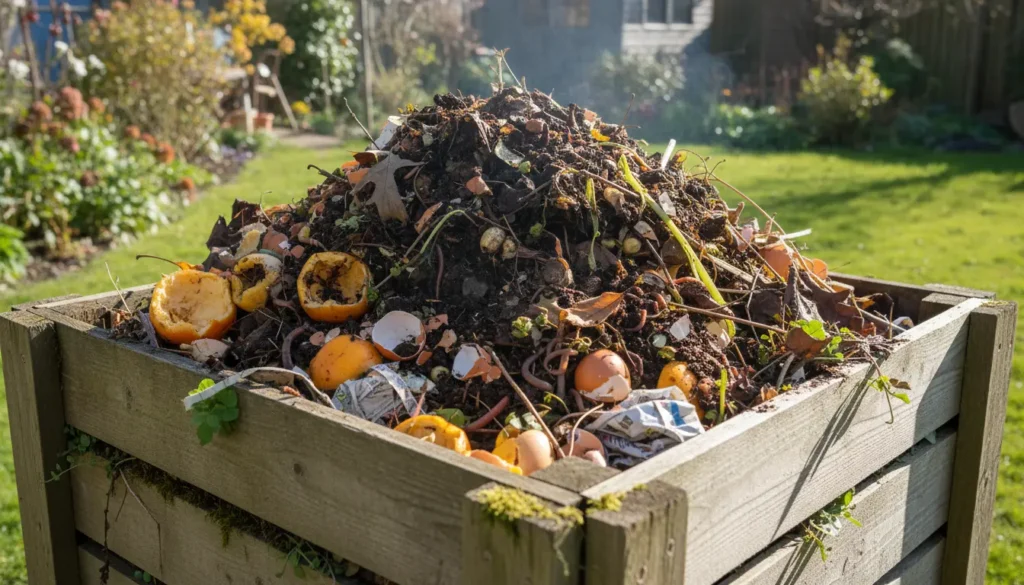
Home composting turns kitchen scraps and yard waste into rich soil that feeds plants and cuts landfill trash. This guide gives clear, practical steps for beginners to start and maintain a home compost pile or bin.
Why Home Composting Matters
Composting reduces methane from landfills and returns nutrients to soil. It is an easy way to support a garden, save on fertilizer, and cut household waste.
- Reduces trash volume and pickup costs.
- Improves soil structure and water retention.
- Provides free, nutrient-rich compost for potted plants and beds.
Getting Started with Home Composting
Decide on a system that fits your space and routine. Options include a simple pile, a freestanding bin, a tumbler, or a worm composting setup (vermicompost).
Choosing a Compost System
Consider space, odor control, and how often you will turn the material. Tumblers are neat and easy to turn. Open piles work for larger yards. Worm bins are ideal for small spaces and kitchen scraps.
What to Compost
Balance “greens” (nitrogen-rich) and “browns” (carbon-rich) for faster breakdown. Aim for roughly a 2:1 ratio of browns to greens by volume.
- Greens: fruit and vegetable scraps, coffee grounds, fresh grass clippings.
- Browns: dry leaves, shredded paper, cardboard, straw.
What Not to Compost
Avoid meat, dairy, oily foods, and diseased plants. These attract pests or slow decomposition.
- No bones, meat, or fish scraps.
- Avoid pet waste and oily kitchen waste.
- Skip glossy or colored printed paper and invasive weeds with seeds.
How to Build and Maintain Compost
Follow simple steps to start a healthy compost pile. Regular attention speeds results and reduces problems.
- Pick a location: partial shade with good drainage works best.
- Layer materials: start with coarse browns, add greens, then cover with browns to reduce flies.
- Moisture: aim for a damp sponge feel. Too dry slows microbes; too wet creates odor.
- Turn: aerate every 1–2 weeks for faster breakdown, or use a tumbler to make turning easier.
- Monitor temperature: an active pile warms up. Cooler piles still work but take longer.
Quick Maintenance Checklist
- Keep a small countertop bin for daily scraps.
- Chop large pieces to speed decomposition.
- Add browns after adding greens to keep balance.
- Use finished compost to topdress soil or mix into potting mixes.
Composting can divert up to 30% of household waste from the trash. Even small kitchens can compost with a worm bin or sealed countertop container.
Troubleshooting Home Composting Problems
Common issues are easy to fix when you know the signs. Check moisture, balance, and aeration first.
Problem: Bad Odor
Cause: Too wet or too many greens. Fix: Add dry browns, turn the pile, and reduce wet inputs.
Problem: Pests or Rodents
Cause: Food scraps like meat or oily foods, or an open pile. Fix: Use a sealed bin or tumbler and avoid risky food items. Bury new scraps under browns.
Problem: Slow Decomposition
Cause: Too dry, too cold, or not enough surface area. Fix: Moisten the pile, chop materials, and add more greens if the pile is carbon-heavy.
Small Case Study: Neighbors Start Composting
A family of four in a suburban lot started a 200-liter tumbler and used a small countertop caddy for scraps. Within three months they produced enough compost to amend their vegetable beds.
Results: They reduced kitchen waste by about 40% and reported healthier tomato plants with fewer watering needs. The family turned the tumbler weekly and kept a balance of cardboard shreds and coffee grounds.
Using Finished Compost
Finished compost is dark, crumbly, and smells earthy. It is ready when original materials are unrecognizable.
- Mix into garden beds at 10–30% by volume.
- Topdress lawns with a thin layer to improve soil health.
- Use as potting mix amendment at 10–20% for container plants.
Simple Tips for Long-Term Success
Make composting a routine habit. Keep a small bin for daily scraps and empty it into the main pile weekly. Learn to balance materials and check moisture regularly.
- Keep tools and a shovel near the pile for easy turning.
- Label bins for different uses: yard waste, finished compost, worm bin contents.
- Start small and scale up as you gain confidence.
Home composting is practical, low-cost, and effective. With a suitable bin, a balance of greens and browns, and simple maintenance, most households can produce valuable compost in a few months.