Home composting is a simple way to recycle organic waste, cut kitchen garbage, and improve garden soil. This guide gives clear, actionable steps for beginners to start composting at home using small tools and common materials.
Why Start Home Composting
Composting reduces landfill waste and produces nutrient-rich compost for plants. It also saves money on store-bought soil amendments and supports soil health over time.
How Home Composting Works
Composting is a biological process where microbes break down organic matter into humus. The process needs three main inputs: carbon, nitrogen, and oxygen.
Balance Greens and Browns
Greens are nitrogen-rich materials like vegetable scraps and fresh grass clippings. Browns are carbon-rich items like dry leaves, paper, and cardboard.
A common rule is roughly 2 to 3 parts browns to 1 part greens by volume. Adjust as needed based on smell and moisture.
Aeration and Moisture
Microbes need air and moisture to work. Turn the pile every 1–2 weeks to add oxygen. Keep the compost damp like a wrung-out sponge, not soaking wet.
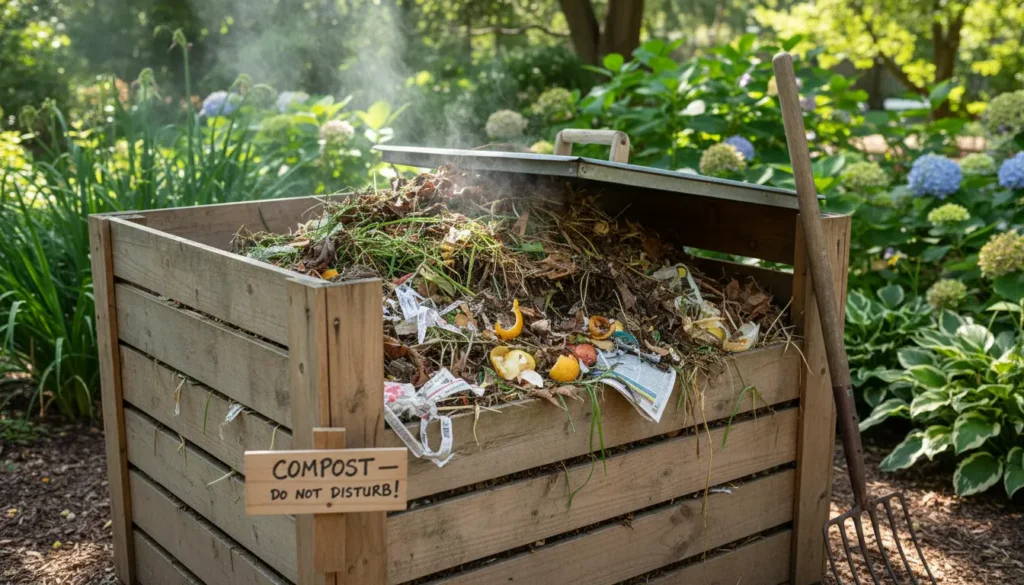
Well-managed compost piles can reach temperatures of 120 to 160 F, which helps kill weed seeds and pathogens. Even small backyard bins can heat up if balanced correctly.
Step-by-Step Home Composting for Beginners
Follow these steps to set up and maintain a compost system at home. Each step is simple and needs basic items.
- Choose a location. Pick a spot with good drainage and partial shade. A flat area near a water source is ideal.
- Select a container. Use a simple open pile, a bin, or a tumbling composter. For small yards, a 3-bin setup or an enclosed bin works well.
- Collect materials. Keep a kitchen caddy for vegetable scraps and a yard waste bag for leaves and grass.
- Build the pile. Start with a layer of coarse browns for drainage. Alternate layers of greens and browns, maintaining a roughly 2:1 or 3:1 brown-to-green ratio.
- Maintain the pile. Turn the pile every 1–2 weeks. Monitor moisture and add water or dry browns if necessary.
- Harvest compost. After 3–6 months, finished compost looks dark, crumbly, and earthy. Use it in garden beds, pots, and lawn topdressings.
Tools and Materials for Home Composting
Beginner-friendly tools help make composting easier. You do not need expensive gear to get started.
- Compost bin or tumbler
- Pitchfork or compost turner
- Kitchen caddy or bucket with lid
- Shredder or scissors for chopping large items
- Moisture meter (optional) or simple touch test
Common Problems and Solutions in Home Composting
Problems are usually easy to fix once you know the signs. Here are typical issues and practical solutions.
- Bad smell: Add more browns and turn the pile to increase aeration.
- Pile too dry: Add water and more greens to increase moisture.
- Pile too wet: Add dry browns and mix to improve drainage.
- Slow decomposition: Chop materials into smaller pieces and maintain a good green to brown balance.
Small Case Study: Apartment Balcony Composting
Maria lives in a two-bedroom apartment and wanted to compost but had limited space. She chose a compact worm bin and kept it on her balcony.
She collected veggie scraps in a sealed container and added shredded paper as bedding. Within two months she had a steady supply of vermicompost for her potted herbs. Routine maintenance took 15 minutes per week.
Key takeaways: choose the right system for your space, keep the bin covered, and maintain balance between food scraps and bedding.
Final Tips for Home Composting
Small habits make composting predictable and low-effort. Use these tips to improve results and avoid common mistakes.
- Chop or shred large items to speed decomposition.
- Keep a small supply of dry browns near your bin for quick additions.
- Rotate materials and avoid adding meat, dairy, or oily foods to standard bins.
- Label finished compost containers and store compost in a dry place until use.
Ready to Start Home Composting?
Start small and adapt as you learn. Composting is forgiving, and even simple efforts reduce waste and support healthier plants.
If you have specific space constraints or questions about materials, try one small method for a month and adjust from there.