What is Home Composting?
Home composting is the controlled decomposition of organic kitchen and garden waste into a nutrient-rich soil amendment. It reduces landfill waste and supplies free compost for plants and lawns.
Why Start a Compost Pile
Composting lowers household waste, improves soil structure, and supports plant health. It also reduces the need for chemical fertilizers and helps retain water in garden soil.
How to Start a Compost Pile
Choose a level spot with partial shade and good drainage. A 3-foot by 3-foot space works well for most households.
Pick a Container or Bin
Options include open piles, wooden bins, or rotating compost tumblers. Bins keep the pile tidy and deter pests, while tumblers speed up mixing.
Layering the Pile
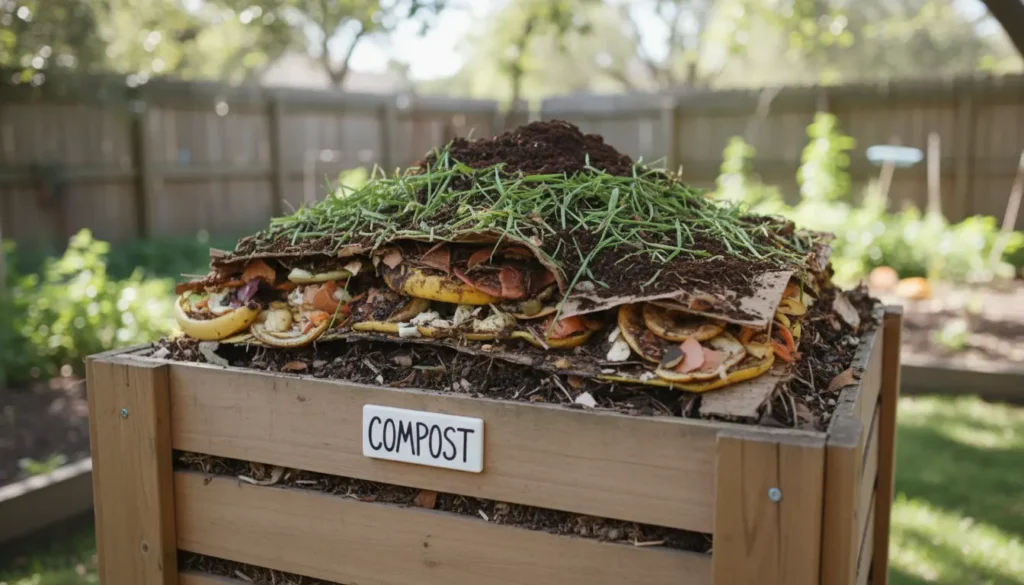
Start with coarse material like small branches to promote airflow. Alternate layers of brown and green materials to maintain balance.
- Brown materials: dry leaves, straw, shredded paper
- Green materials: vegetable scraps, coffee grounds, grass clippings
- Water: keep the pile as moist as a wrung-out sponge
What to Add and Avoid in Home Composting
Knowing what to include and avoid prevents foul odors and pests. Good choices are kitchen scraps and yard waste. Avoid meat, dairy, oily foods, and diseased plants.
Quick Reference: Do and Don’t
- Do add: fruit and vegetable scraps, coffee grounds, eggshells, shredded paper
- Do add: lawn clippings in thin layers, garden trimmings
- Don’t add: meat, fish, bones, dairy, grease
- Don’t add: pet feces, invasive weeds with seeds, treated wood
Maintaining Your Compost Pile
Maintenance keeps decomposition active and prevents problems. Aim to turn the pile every 1–2 weeks for faster composting.
Airflow and Moisture
Turn the pile to introduce oxygen. Check moisture weekly; add water during dry spells or add dry browns if too wet.
Temperature and Time
A healthy, active pile heats to 120–160°F (50–70°C) for a short period, which helps kill weed seeds. Most home compost piles take 2–6 months to produce usable compost.
Troubleshooting Common Problems
Bad smells usually mean too much green or not enough air. Add shredded paper or dry leaves and turn the pile.
- Problem: Fruit flies — Cover new food scraps with a layer of brown material.
- Problem: Slow breakdown — Chop materials smaller and mix greens and browns evenly.
- Problem: Pests — Use a closed bin and avoid adding meat or oily foods.
Composting can reduce household waste by up to 30 percent and return valuable nutrients like nitrogen and phosphorus to your garden.
Small Real-World Example
Case study: A two-person household in a suburban yard started a 3×3-foot compost bin using a mix of kitchen scraps and dried leaves. They turned the pile every 10 days and maintained moderate moisture.
After four months they produced about 40 liters of finished compost. They used it to top-dress two raised garden beds and reported healthier tomato plants and improved soil moisture retention.
How to Use Finished Compost
Finished compost is dark, crumbly, and earthy-smelling. Use it as a soil amendment by mixing 20–30% compost into garden beds or as a mulch around plants.
Practical Uses
- Mix into potting soil for seedlings
- Top-dress lawns and garden beds
- Use as a component in homemade potting mixes
Quick Start Checklist for Home Composting
- Choose a bin and location
- Collect greens and browns separately
- Layer materials and keep the pile moist
- Turn regularly for airflow
- Harvest finished compost after 2–6 months
Home composting is practical and affordable. With basic attention to balance, moisture, and turning, most households can produce nutrient-rich compost that benefits gardens and reduces waste.