What Is Home Composting?
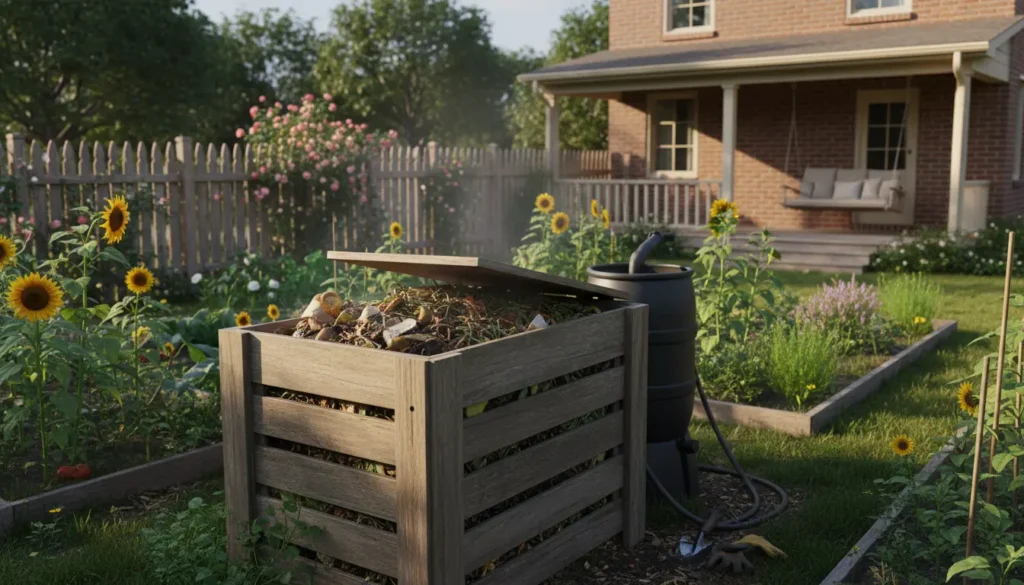
Home composting is the controlled breakdown of organic kitchen and yard waste into a nutrient-rich soil amendment. It returns carbon and nitrogen to the soil and reduces the amount of waste sent to landfills.
Compost improves soil structure, water retention, and plant health when mixed into garden beds or potted soil. You can compost in backyards, balconies, or even indoors with the right method.
Benefits of Home Composting
Home composting reduces household waste and lowers greenhouse gas emissions from organic waste in landfills. It also produces free, high-quality compost that supports plant growth.
Other benefits include saving money on fertilizers and improving local soil health. Composting encourages mindful consumption of food and yard waste.
How to Start Home Composting
Starting home composting is easier than many people think. Follow a few basic steps and pick a method that fits your space and schedule.
Choose a Composting Method
Select a method based on space, time, and the type of waste you produce. Common home composting methods include:
- Traditional backyard bin or pile — good for yards and larger volumes.
- Tumbler composters — faster mixing and contained for tidiness.
- Vermicomposting (worm bins) — ideal for small spaces and indoor use.
- Bokashi fermenting — handles cooked foods and works well in apartments.
Each method has trade-offs: speed, odor control, and the kinds of materials accepted.
Set Up Your Compost Bin
Position your compost bin on soil or a stable surface with some shade. If using a container, ensure drainage and some airflow to support decomposition.
For a simple backyard pile, start with a layer of coarse material like twigs to help air circulate. In a worm bin, add shredded cardboard or coconut coir to create bedding for the worms.
Feed and Maintain the Pile
Balance green (nitrogen-rich) and brown (carbon-rich) materials. Aim for roughly 2:1 or 3:1 brown to green by volume for a steady decomposition process.
- Greens: vegetable scraps, coffee grounds, grass clippings.
- Browns: dry leaves, shredded paper, straw, cardboard.
Turn or aerate the pile every 1–2 weeks to add oxygen and speed composting. Keep the pile moist like a wrung-out sponge; too dry or too wet conditions slow the process.
Troubleshooting Home Composting Problems
Common issues are odors, pests, slow decomposition, and poor texture. Most problems are fixable by adjusting balance, moisture, or airflow.
- Odor: Add more browns and turn the pile to reintroduce air.
- Pests: Avoid adding meat, dairy, or oily foods; use a closed bin if needed.
- Slow breakdown: Chop materials into smaller pieces and ensure adequate moisture and aeration.
- Worm bin issues: Keep temperature between 55–77°F (13–25°C) and add more bedding if it smells.
When Is Compost Ready?
Finished compost is dark, crumbly, and smells earthy. Depending on the method, compost can be ready in two months to a year.
Use finished compost as a top dressing, soil amendment, or potting mix ingredient. Sift out large pieces and return them to the pile to continue decomposing.
Composting one ton of organic waste can prevent approximately 0.5 to 1 ton of CO2 equivalent emissions compared to landfilling. Home composting adds up when many households participate.
Case Study: Small Urban Home Composting Setup
Maria lives in a two-bedroom apartment and wanted to reduce waste and feed her balcony vegetable pots. She chose a small worm bin for home composting because of limited space and ease of use.
She started with a 10-liter plastic worm bin, red wiggler worms, shredded cardboard bedding, and a weekly addition of kitchen scraps. Within three months she had usable castings for her tomato and herb pots.
Key takeaways from Maria’s example: pick a compact method, keep a steady input of scraps, and maintain moisture and bedding for healthy worms.
Practical Tips and Quick Checklist for Home Composting
- Start small: begin with kitchen scraps and expand as you learn.
- Chop or shred larger items to speed up decomposition.
- Keep a covered container for kitchen scraps to limit pests and odors.
- Monitor moisture and aerate regularly — it prevents most issues.
- Use finished compost as a soil amendment or mulch for best results.
Home composting is a straightforward way to reduce waste and support local soil health. Choose a method that fits your living situation and commit to simple maintenance routines.
With a bit of attention to balance, moisture, and airflow you can produce valuable compost and feel confident managing your organic waste at home.