Getting ready to start a vegetable garden
Beginning a vegetable garden can be simple if you focus on the right steps. This guide breaks the process down into practical tasks you can complete in a weekend or over a few evenings.
Follow these instructions to set up a productive, low-stress garden whether you have a yard or just a sunny balcony.
Choose the right spot for your vegetable garden
Location makes a big difference when you start a vegetable garden. Most vegetables need at least 6 hours of direct sunlight each day.
Pick a spot that is level, drains well, and is close to a water source for easier maintenance.
Assess sun and shade
Track sunlight for a day or use a smartphone app to map sun exposure. Avoid areas that are shaded by trees during the main growing hours.
Consider access and safety
Choose a place that’s easy to reach from your kitchen and protected from strong winds. If pests like deer are common, plan for fencing.
Prepare soil before planting
Good soil is the foundation for a healthy vegetable garden. Test and amend soil to ensure plants get the nutrients they need.
Soil testing and improvement
- Buy an inexpensive soil test kit or send a sample to a local extension service.
- Add compost or well-rotted manure to improve structure and fertility.
- Mix in coarse sand or perlite if drainage is poor.
Raised beds vs. in-ground
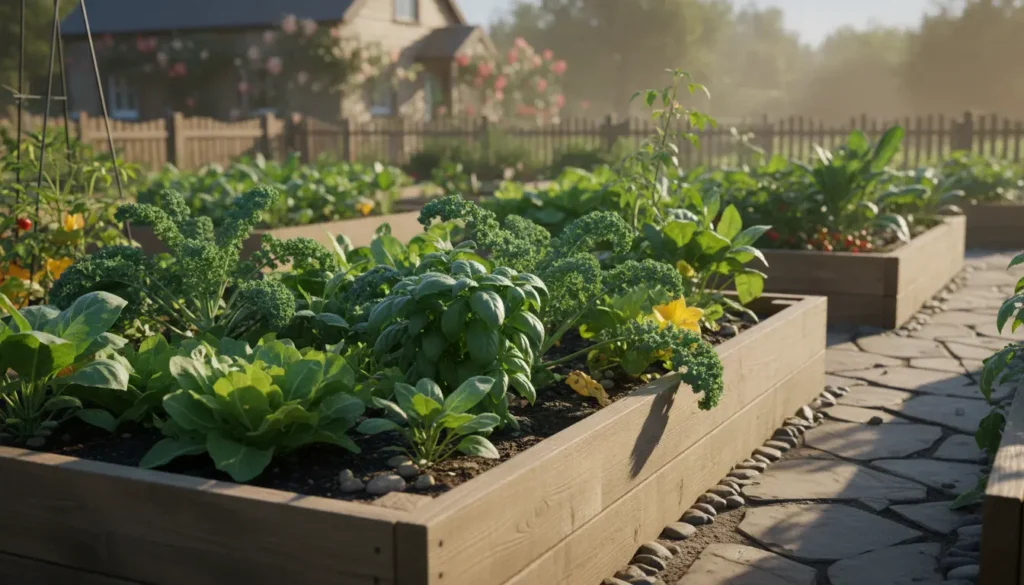
Raised beds warm faster and are easier to control for beginners. In-ground gardens work well if your soil is already healthy.
Select easy vegetables to start a vegetable garden
Pick plants that are forgiving and productive for your first season. Fast-growing crops give quicker rewards and maintain interest.
- Leafy greens: lettuce, spinach, Swiss chard
- Root vegetables: radishes, carrots
- Fruiting plants: cherry tomatoes, bush beans
- Herbs: basil, parsley, chives
Seed vs. seedlings
Seeds are cheaper but take longer. Buy seedlings (starts) for quick results and to avoid early failures.
Planting and spacing for success
Follow seed packet or plant tag instructions for depth and spacing. Crowded plants compete for water and nutrients.
Stagger plantings of quick crops like lettuce every 2–3 weeks to maintain a steady harvest.
Watering and feeding your vegetable garden
Consistent watering encourages healthy roots. Deep, infrequent watering is better than shallow daily misting.
- Water in the morning to reduce disease.
- Use a soaker hose or drip irrigation to deliver water to roots.
- Mulch with straw or wood chips to retain moisture and suppress weeds.
Fertilizing basics
Use balanced organic fertilizer or compost tea during the growing season. Avoid overfeeding; follow label rates.
Adding one inch of compost per square foot each year can improve soil structure and increase yield without synthetic fertilizers.
Manage pests and diseases
Early monitoring reduces damage. Inspect plants weekly and remove affected leaves immediately.
- Handpick larger pests like slugs and caterpillars.
- Use row covers to protect young plants from insects and birds.
- Encourage beneficial insects by planting flowers like marigolds and alyssum.
Organic control options
Neem oil, insecticidal soap, and diatomaceous earth can reduce pest pressure without harming pollinators when used carefully.
Harvesting and ongoing maintenance
Harvest crops at peak ripeness for best flavor and to encourage more production. Regular pruning keeps plants healthy.
Clean up plant debris at season end to reduce overwintering pests and diseases.
Season extension tips
Use row covers, cold frames, or a simple hoop house to extend the season by several weeks in spring and fall.
Small case study: Sarah’s 10×10 raised bed vegetable garden
Sarah, a busy teacher, converted a 10×10 patch into a raised bed garden. She started with compost-rich soil and planted cherry tomatoes, bush beans, lettuce, and basil.
Within two months she harvested weekly salads and saved about $30 per month on groceries. Simple irrigation and mulch cut her watering time to 10 minutes twice a week.
Key results: continuous harvest, minimal pest issues, and low weekly maintenance time.
Quick checklist to start a vegetable garden
- Choose a sunny spot near water.
- Test and improve soil with compost.
- Select 4–6 easy crops for your first season.
- Plant seeds or starts with correct spacing.
- Mulch, water deeply, and monitor weekly.
- Harvest regularly and record successes for next year.
Starting a vegetable garden is a manageable project that rewards planning and small, consistent efforts. Use this guide as a checklist and adjust steps to fit your space, climate, and schedule.