Why Start a Vegetable Garden
Growing vegetables at home saves money and gives fresher food. A small garden also teaches seasonal care and can improve outdoor spaces.
This guide covers planning, soil, planting, and maintenance with clear steps you can follow in your first season.
Planning Your Vegetable Garden
Good planning reduces mistakes and increases yields. Start with a simple layout and a short list of vegetables suited to your climate.
Choose a Site for Your Vegetable Garden
Select a spot that gets at least 6 hours of sunlight daily. Good drainage and easy access to water are also important.
Avoid low areas where frost or standing water collects. If space is limited, consider containers or raised beds.
Select Vegetables to Grow
Begin with easy-to-grow crops like lettuce, radishes, tomatoes, and beans. Choose varieties labeled “easy” or “beginner friendly.”
Think about how you will use the harvest. Leafy greens and herbs give quick returns, while tomatoes and peppers take longer but store well.
Soil and Tools for a Vegetable Garden
Healthy soil is the backbone of any vegetable garden. Invest time in improving soil structure and fertility before planting.
Test and Improve Your Soil
Use a simple soil test kit to check pH and nutrient levels. Most vegetables prefer a slightly acidic to neutral pH (6.0–7.0).
Add organic matter like compost or well-rotted manure to improve texture and nutrients. Aim for a 2–4 inch layer mixed into the top 6–8 inches of soil.
Essential Tools
- Spade or shovel for digging and soil work
- Garden fork or tiller for loosening compacted soil
- Hand trowel and cultivator for planting and weeding
- Watering can or hose with a gentle nozzle
Planting and Care in a Vegetable Garden
Timing is important. Plant seedlings or seeds according to local frost dates and the crop’s heat tolerance.
Planting Steps
- Prepare beds by removing weeds and adding compost.
- Follow spacing recommendations on seed packets or plant tags.
- Water seeds gently after planting and keep soil consistently moist until seedlings establish.
Watering, Mulching, and Fertilizing
Water deeply once or twice a week rather than light daily sprinkling. Deep watering encourages strong roots.
Apply 2–3 inches of organic mulch to conserve moisture and suppress weeds. Use straw, wood chips, or shredded leaves.
Feed plants with a balanced organic fertilizer early in the season and again during peak growth if needed.
Pest and Disease Management
Start with prevention: rotate crops, avoid planting the same family in the same spot, and use clean tools.
- Inspect plants weekly for signs of pests or disease.
- Use row covers or netting to protect young plants from insects and birds.
- Choose disease-resistant varieties when available.
Planting marigolds near tomatoes can reduce some harmful nematodes in the soil. Companion planting is an easy, natural pest control method.
Harvesting and Seasonal Care
Harvest vegetables when they are ripe to encourage more production. Regular harvesting of beans and greens extends the season.
At the end of the season, remove spent plants and add them to the compost pile if disease-free. Cover beds with mulch or a winter cover crop to protect soil.
Extending the Season in Your Vegetable Garden
Use row covers or cold frames to protect crops from early frost. In mild climates, you can harvest into late fall or winter with proper protection.
Start seedlings indoors to get a jump on spring planting and transplant when conditions permit.
Simple Case Study: A 10×10 Backyard Vegetable Garden
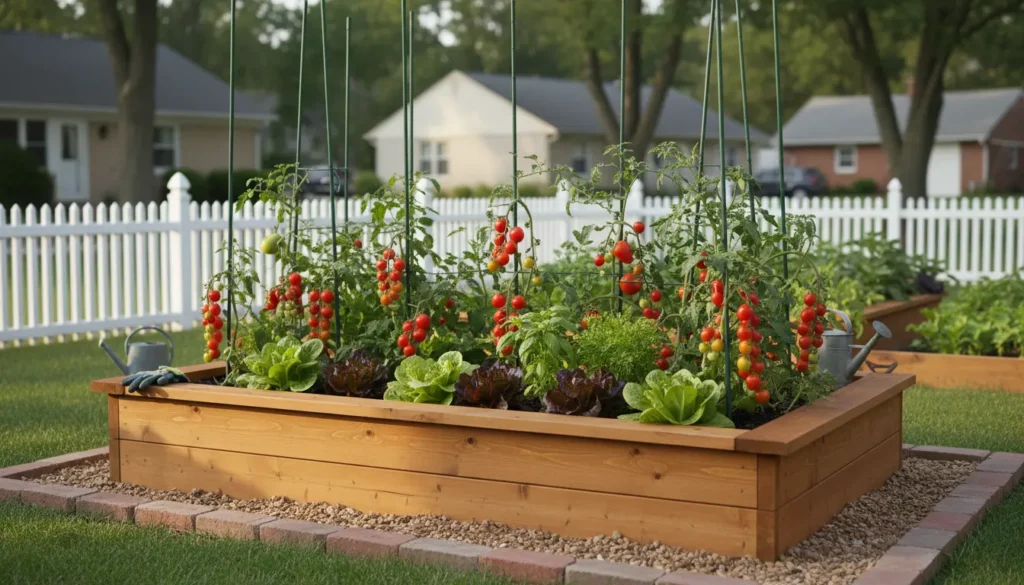
Jane, a first-time gardener, used a 10×10 foot raised bed in a sunny backyard. She selected lettuce, cherry tomatoes, bush beans, and basil.
She improved soil with two wheelbarrows of compost and mulched between rows. Watering with a soaker hose twice weekly kept plants healthy.
By mid-summer Jane harvested enough salad greens for two people three times a week and a steady supply of tomatoes. A few simple pest interventions—handpicking and row covers—kept damage low.
Quick Checklist to Start Your Vegetable Garden
- Choose a sunny site with good drainage
- Test and amend soil with compost
- Select 3–6 easy crops to begin with
- Prepare beds and follow planting dates
- Water deeply, mulch, and inspect regularly for pests
Final Tips for a Successful Vegetable Garden
Start small and build confidence over seasons. Keep a simple garden journal with planting dates and results to learn what works locally.
Join a local garden group or extension service for regional advice on varieties and timing. Practical, consistent care produces the best results.