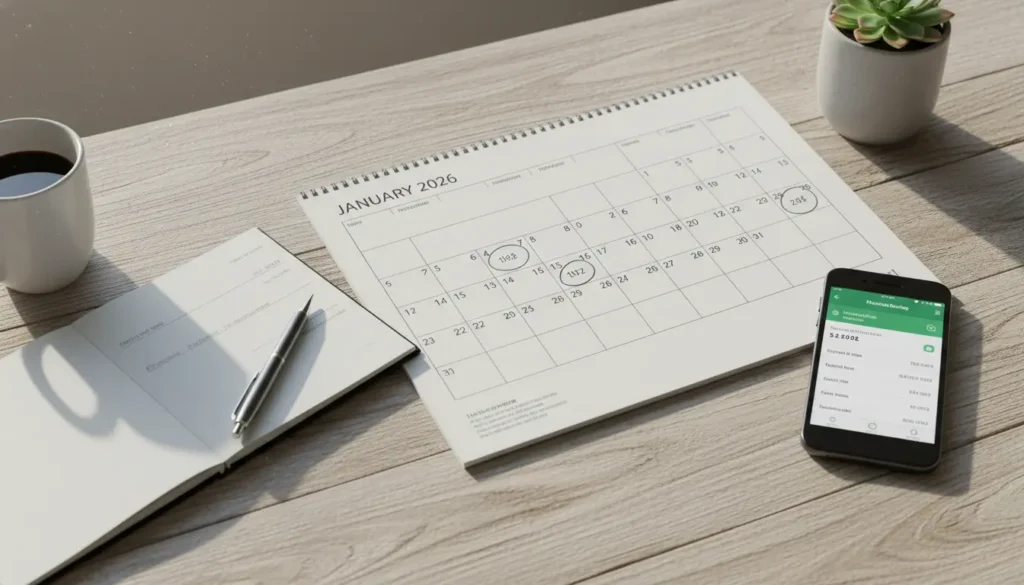
This guide explains the January 2026 2000 IRS direct deposit process in practical steps. You will learn who qualifies, how to confirm deposit status, what to do if a payment is missing, and quick security checks to avoid scams.
January 2026 2000 IRS Direct Deposit Overview
The January 2026 2000 IRS direct deposit refers to a one-time electronic payment of 2000 issued by the IRS and deposited directly into eligible bank accounts. The IRS and Treasury Department typically use direct deposit to speed delivery to taxpayers with available banking information.
Direct deposit is faster than a paper check and usually shows up on your bank statement with an identifying payer name and transaction date. Follow the steps below to confirm eligibility and status.
Who may qualify for the January 2026 2000 IRS Direct Deposit
Qualification rules vary by program, but common eligibility points include recent tax filing status, income thresholds, and whether you received prior IRS economic payments. Check the official IRS notice mailed to recipients for exact criteria.
- Filed a 2024 or 2025 tax return and reported eligible income
- Provided valid direct deposit bank information on prior IRS records
- Did not opt out of electronic payments in recent IRS communications
How the payment amount and timing are determined
The IRS calculates eligibility from tax records, Social Security/benefit records, and other federal databases. Payments are scheduled in processing batches, and timing depends on when your record was processed.
If the IRS had your bank account on file, the payment is likely to be sent by direct deposit. If not, a mailed check or prepaid debit card could be used instead.
How to Check Your January 2026 2000 IRS Direct Deposit Status
Use the IRS tools and your bank first. The IRS provides online trackers and apps that show payment status. Your bank can confirm whether money has arrived and how the deposit is labeled.
Step-by-step status check
- Sign in to the IRS Get My Payment or equivalent IRS online tool and enter your details.
- Check the IRS2Go mobile app if you prefer a phone interface.
- Review recent transactions in your bank account around January 2026 for a deposit of 2000.
- If no deposit appears, locate any mailed notices from the IRS and follow the instructions on the notice.
What to Do If You Don’t Receive the January 2026 2000 IRS Direct Deposit
Not receiving a payment does not always mean you are ineligible. There are several practical steps to take to trace or claim the money.
Immediate actions
- Recheck the IRS online tool for updated status messages or reissued payment dates.
- Look for an IRS notice (mailed letter) explaining a delay or alternate delivery method.
- Contact your bank to confirm whether the deposit was returned or routed incorrectly.
When to file a trace or request help
If you believe a direct deposit was sent but did not post, you can request a payment trace. The IRS can guide you on required forms and the trace timeline. In some cases, filing the appropriate IRS trace form starts an investigation into the missing deposit.
Direct deposits typically clear faster than mailed checks, often within 1–3 business days after the Treasury issues the payment. The IRS uses unique transaction codes you can look for on bank statements.
Updating Bank Info and Preparing for Future Deposits
If your bank account changed since your last IRS record, update your information as soon as the IRS allows for the program. Some IRS tools permit updating banking details before a scheduled payment, while others do not.
Practical tips to update or prepare
- Log in to your IRS account and check for update options for direct deposit details.
- Keep digital copies of any IRS notices that reference your payment method.
- If a change is not possible before the payment, have your bank ready to accept a mailed check and deposit it promptly.
Security and Scam Prevention for the January 2026 2000 IRS Direct Deposit
Scammers may exploit announcements of government payments. Be cautious of unsolicited emails, texts, or calls claiming to update your bank info for a payment.
- The IRS will not call or text asking for passwords or full bank account numbers.
- Use official IRS.gov web pages and the IRS2Go app for updates and checks.
- Report suspicious communications to the Treasury Inspector General for Tax Administration (TIGTA).
Small Real-World Example
Case study: Maria, a single filer, expected the January 2026 2000 IRS direct deposit. She checked the IRS Get My Payment tool and saw a scheduled deposit date. When no deposit appeared, she called her bank. The bank found the deposit had been routed to her old account and returned to the Treasury. Maria followed the IRS trace instructions and received a reissue notice within three weeks.
This example shows why keeping banking info current and checking both IRS tools and bank statements is important.
Quick Checklist Before and After January 2026 2000 IRS Direct Deposit
- Confirm eligibility and watch for IRS notices.
- Use the IRS online tool to check status and delivery method.
- Verify bank account activity around the payment date.
- Report missing payments promptly using IRS guidance and trace forms.
- Protect personal information and report scams immediately.
For official updates, always check IRS.gov or call IRS support lines shown on the official website. This guide provides practical steps but not legal advice; contact the IRS or a tax professional for case-specific help.