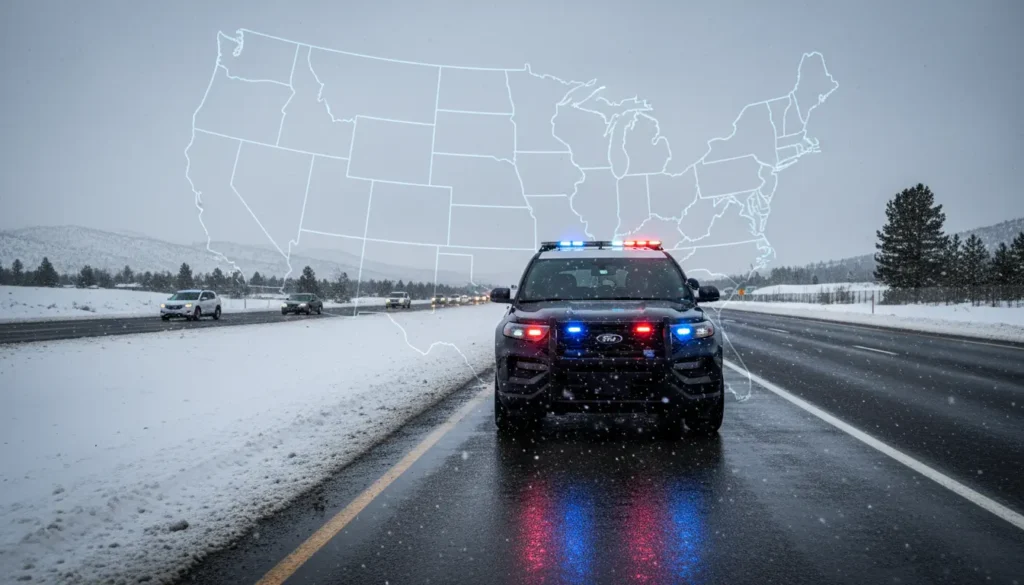
Starting in January, a nationwide change in driving enforcement and compliance is in effect. While details vary by state, the broad pattern is uniform: stricter proof and behavior standards for drivers, and stronger penalties for noncompliance.
New January Driving Law: What drivers need to know
The new measures focus on improving road safety and enforcement consistency across all 50 states. Most states implemented or ramped up rules around required documentation, electronic verification, and certain on-road behaviors.
Key areas of emphasis include proof of insurance, valid licensing, cooperation during traffic stops, and limits on distracted or impaired driving. Failure to meet these standards can trigger administrative penalties, fines up to $1,500 in some cases, or even short jail stays for repeated or severe violations.
Who the new law affects
All licensed drivers are affected, including residents, nonresident drivers, commercial drivers, and ride-share operators. Vehicle owners who fail to keep registration, insurance, or required inspections current can also face penalties.
Commercial carriers may see stricter inspection protocols and higher civil penalties for violations. Young drivers and those with prior offenses should pay particular attention because penalties escalate faster for repeat violations.
Penalties: fines and jail explained
States have different penalty structures, but the common outcomes include on-the-spot fines, court citations, and in extreme or repeated cases, short custodial sentences. Fines can reach $1,500 where statutes allow enhanced penalties for specific violations.
Jail risk is generally limited to serious offenses: repeated failure to appear, driving on a suspended license after multiple notices, refusal to comply with lawful orders, or driving under the influence with aggravating factors. Administrative fines and license suspension are more common than jail in most first-time cases.
Many states now accept electronic proof of insurance via a phone app or digital card. Confirm whether your state accepts electronic documents before relying on them during a traffic stop.
How to avoid $1,500 fines or jail under the new rules
Follow these practical steps to reduce your risk of fines or criminal charges. These actions address the most commonly enforced requirements under the January changes.
- Keep proof of insurance current and accessible. Use a state-approved electronic or paper copy depending on your jurisdiction.
- Ensure your driver’s license and vehicle registration are valid and up to date. Renew early to avoid lapses.
- Comply with lawful orders during traffic stops: remain calm, provide requested documents, and avoid evasive behavior.
- Avoid distracted driving: follow state restrictions on handheld phone use and in-vehicle distractions.
- Stay sober: zero-tolerance or lower blood alcohol limits in some areas increase risk of severe penalties.
- Respond to tickets and court notices promptly. Missing a court date or failing to pay fines can escalate into higher fines or arrest warrants.
Immediate checklist before you drive
- Insurance: digital or paper ID card in vehicle or phone wallet.
- License: valid, not expired, and matches vehicle registration.
- Registration: current sticker or digital proof if your DMV allows it.
- Vehicle safety: working lights, tires in good condition, and no outstanding safety recalls that make operation unsafe.
Steps to confirm what applies in your state
Because enforcement details vary, check official sources quickly. Use the following reliable steps to confirm how the new rules apply to you.
- Visit your state DMV or Department of Transportation website for the specific January updates and FAQs.
- Call your local law enforcement non-emergency line to confirm whether digital proof of documents is acceptable.
- Check for any county-level or city ordinances that add penalties or local requirements on top of state law.
- Ask your insurance provider whether the policy and ID meet new verification standards.
When to get legal help
Consult a traffic attorney if you face high fines, license suspension, or potential jail time. An attorney can advise on motions, plea options, and requests for alternative compliance programs such as traffic school.
Legal help is also useful if you believe enforcement was improper or you have evidence to dispute charges. Acting quickly often preserves options and can reduce penalties.
Case study: Real-world example
Example: Maria, a delivery driver in a midwestern state, let her vehicle registration lapse by two weeks. During a routine stop, officers issued a citation and gave a deadline to appear in court. Maria missed the deadline because she assumed a short grace period applied. Her missed appearance triggered an additional fine and a notice of license suspension.
What Maria did right: She immediately renewed registration, gathered proof of insurance, and hired a traffic attorney who negotiated a reduced fine and avoided jail. The case shows that fast corrective action and professional advice can limit financial and legal consequences.
Practical examples of common violations
- Driving without proof of insurance: Often a fine plus requirement to obtain SR-22 or reinstatement fees.
- Refusal to present documents to officers: Can lead to citations and possible arrest if obstruction is alleged.
- Using a handheld phone where banned: Fines and points that increase insurance costs.
Staying informed and proactive is the best way to avoid expensive fines or legal trouble under the new January rules. Small steps—renewing documents early, carrying accepted proof, and cooperating with officers—prevent most common penalties.
If you are unsure what applies in your state, use the checklist above and contact your DMV or a qualified traffic attorney for tailored advice.