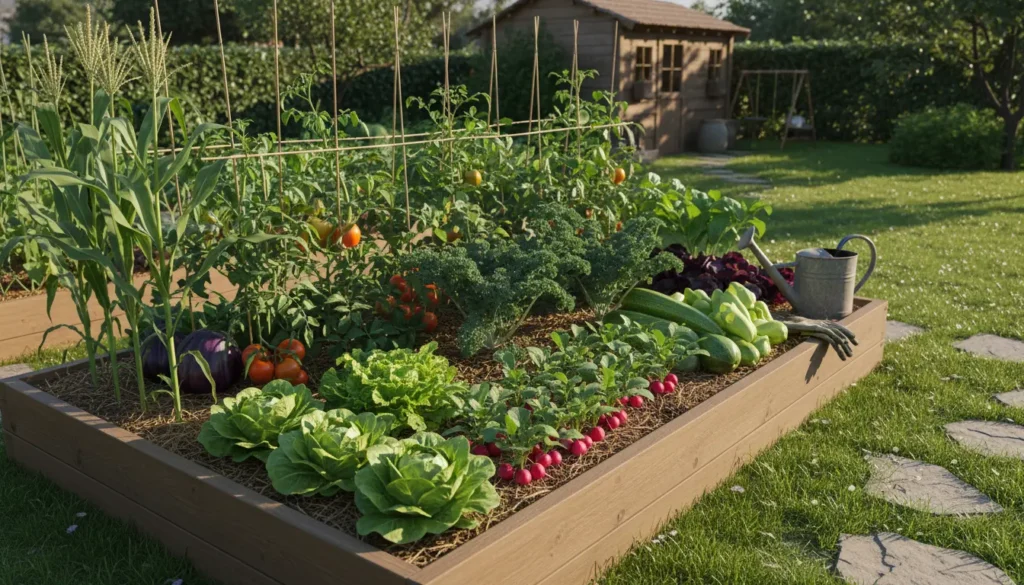
Starting a small vegetable garden is practical and rewarding. This guide gives clear steps you can follow whether you have a balcony, patio, or a tiny backyard.
Planning to Start a Small Vegetable Garden
Good planning reduces wasted time and expense. Begin by assessing light, available space, and your weekly time for maintenance.
Choose the Right Location for Your Small Vegetable Garden
Most vegetables need 6–8 hours of direct sunlight. Track sun patterns for a week to confirm the best spot.
Consider accessibility for watering and harvesting, and proximity to a water source. If ground soil is poor, raised beds or containers are efficient alternatives.
Decide What to Grow in a Small Vegetable Garden
Focus on high-yield, space-efficient crops. Leafy greens, herbs, radishes, cherry tomatoes, and bush beans are good choices.
- Pick crops you like to eat and that suit your climate.
- Start with 3–6 types to keep maintenance manageable.
- Use succession planting to extend harvests from small space.
Soil and Planting for a Small Vegetable Garden
Healthy soil is the most important factor for success. Even small gardens require loose, fertile soil with good drainage.
Improve Soil Quickly in a Small Vegetable Garden
If using raised beds or containers, use a mix of quality topsoil, compost, and a light aerating material like perlite or coarse sand.
For in-ground gardens, loosen soil to at least 8–12 inches. Mix in 2–4 inches of compost and a balanced slow-release granular fertilizer according to package directions.
Planting Schedule and Spacing for a Small Vegetable Garden
Read seed packet or plant tag instructions for planting depth and spacing. Overcrowding causes disease and poor yields.
- Use vertical supports (trellises, cages) for vining crops to save ground space.
- Stagger plantings every 2–3 weeks for continuous harvests.
- Companion plant where appropriate to maximize use of space.
Care and Maintenance for a Small Vegetable Garden
Routine care keeps plants productive. Small gardens benefit from simple, repeatable maintenance tasks you can do in short sessions.
Watering, Mulching, and Fertilizing in a Small Vegetable Garden
Water deeply and less frequently to encourage strong roots. Aim for 1–1.5 inches of water per week, adjusting for weather.
Mulch with straw, shredded leaves, or bark to retain moisture and suppress weeds. Replenish mulch as it decomposes.
Feed plants with a balanced fertilizer or side-dress with compost mid-season for steady growth.
Pest Management in a Small Vegetable Garden
Use preventive measures first: healthy soil, clean beds, and crop rotation. Hand-pick larger pests and use row covers for young plants.
- Encourage beneficial insects with flowering herbs and native plants.
- Use targeted organic controls (insecticidal soap, neem oil) only when necessary.
- Remove diseased foliage promptly to reduce spread.
Small Vegetable Garden Case Study
Case: A 10×6 foot raised bed on a townhouse patio produced regular salads for a family of two. The gardener used three 4×2 foot sections for rotation.
They planted lettuces and spinach in spring and fall, tomatoes and peppers in summer, and bundled carrots and beets in between. Vertical cages for tomatoes freed space for basil and bush beans.
With weekly 20-minute maintenance and seasonal compost additions, they reported consistent harvests and minimal pest problems in the first year.
Quick Checklist to Start a Small Vegetable Garden
- Assess sunlight and measure available space.
- Choose 3–6 easy crops suited to your climate.
- Prepare soil or select a quality container mix.
- Plant with proper spacing and use vertical supports.
- Water deeply, mulch, and fertilize as needed.
- Monitor pests and remove diseased plants promptly.
Starting a small vegetable garden is about manageable steps and regular care. Follow the planning, soil, and maintenance tips above, and adjust as you learn what works in your space.