What Is Composting and Why Start Composting at Home
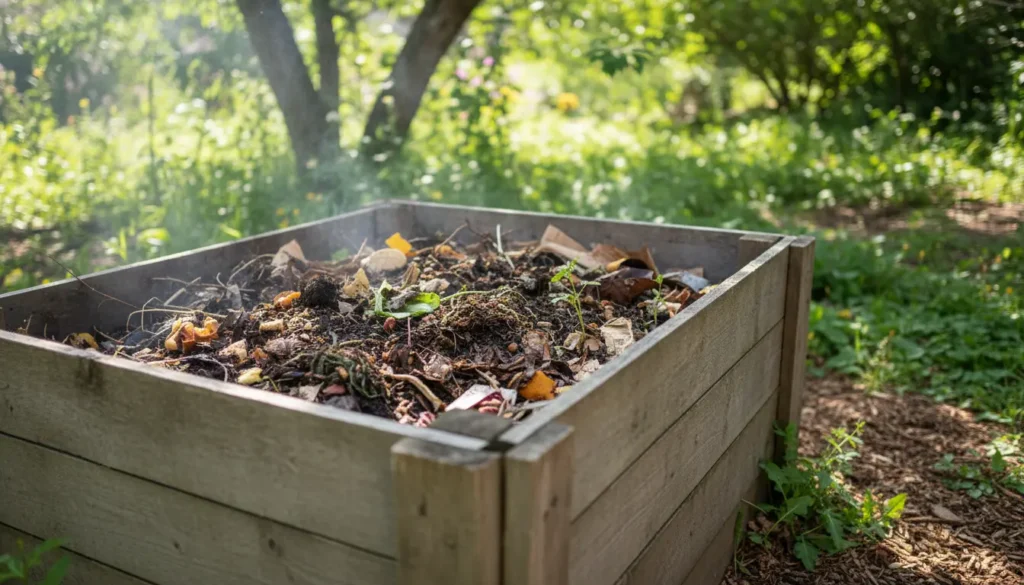
Composting is the controlled decomposition of organic materials into a stable soil amendment. Starting composting at home turns kitchen scraps and yard waste into nutrient-rich compost that improves soil and reduces landfill waste.
Home composting saves money on fertilizers, lowers household waste, and supports healthier garden soil. It is suitable for apartments, suburban yards, and rural properties with small adjustments.
Basics You Need for Composting at Home
Before you begin composting at home, gather a few essentials. You only need a bin or a pile, basic tools, and a mix of materials to get started.
- Compost bin or pile: tumbler, plastic bin, or open pile
- Brown materials: dry leaves, cardboard, paper
- Green materials: kitchen scraps, grass clippings, coffee grounds
- Water source and a pitchfork or garden fork
How to Start Composting at Home: Step by Step
Follow these practical steps to create an effective compost system at home. Each step helps maintain balance and speed up decomposition.
1. Choose a composting method
Select a method that fits your space and routine. Tumblers are tidy and fast, bins are affordable, and open piles are best for large yards.
2. Build the right mix
Aim for a balance of carbon and nitrogen. A simple rule is three parts brown to one part green by volume. Browns provide structure; greens provide protein for microbes.
- Examples of browns: dry leaves, shredded cardboard, straw
- Examples of greens: fruit and vegetable scraps, grass clippings, garden trimmings
3. Layer and maintain moisture
Start with a coarse layer for airflow, then alternate greens and browns. Keep the pile as damp as a wrung-out sponge. Too dry slows decomposition; too wet causes odor.
4. Turn for aeration
Turning the pile every 1 to 2 weeks introduces oxygen and speeds composting. If you use a tumbler, rotate it weekly. For static bins, use a fork to mix the material.
Troubleshooting Common Composting Problems
Issues are usually easy to fix with small adjustments. Inspect your pile before making major changes.
- Bad smell: add more brown materials and turn the pile to increase aeration
- Slow breakdown: chop materials into smaller pieces and increase greens to speed microbes
- Too dry: add water gradually and mix to distribute moisture
- Pests: avoid adding meat, dairy, or oily foods; use a closed bin or bury food scraps
Choosing a Compost Bin for Home Use
Your choice depends on space, budget, and how fast you want finished compost. Compare options before buying or building:
- Tumbler: faster, cleaner, and easier to turn
- Stationary bin: cheap and low maintenance
- Open pile: best for large gardens and free materials
Using Finished Compost in Your Garden
Finished compost looks dark and crumbly and smells earthy. Use it as a soil amendment, mulch, or potting mix component.
- Top dress lawns with a thin layer
- Mix into garden beds at planting time
- Blend with potting soil for containers
Adding crushed eggshells to your compost supplies calcium, which can help reduce blossom end rot in tomatoes when the compost is used in the garden.
Small Real World Example: A Backyard Compost Case Study
Case: A suburban household with two adults and a small garden began composting at home using a 60-gallon tumbler. They saved food scraps in a countertop bin and added yard leaves during autumn.
Outcome: After six months, they produced enough compost to enrich two raised beds and reduced their weekly trash by roughly 40 percent. Regular tumbling and shredding large materials cut processing time in half.
Tips to Make Home Composting Easier
- Keep a small counter caddy to collect kitchen scraps and freeze citrus peels or onions if pests are a concern
- Chop or shred larger items to speed decomposition
- Record turning and watering schedule in a notebook or phone reminder
- Use finished compost gradually to avoid shocking plants
Composting at Home Is Scalable
Whether you live in an apartment or a house, composting at home can be adapted. Vermicomposting is ideal for small indoor spaces, while larger yards can handle multiple bins or open piles.
Start small, learn what works for your routine, and scale up. Regular observation and small adjustments will keep the system efficient and low maintenance.
Final Checklist for Successful Composting at Home
- Choose a bin type that fits your space
- Collect and balance brown and green materials
- Maintain moisture and aeration
- Monitor the pile and troubleshoot odors or pests
- Use finished compost to improve soil health
Starting composting at home is a practical step toward reducing waste and improving garden health. With a simple setup and weekly attention, most households can produce rich compost in months rather than years.