Why Start a Container Vegetable Garden
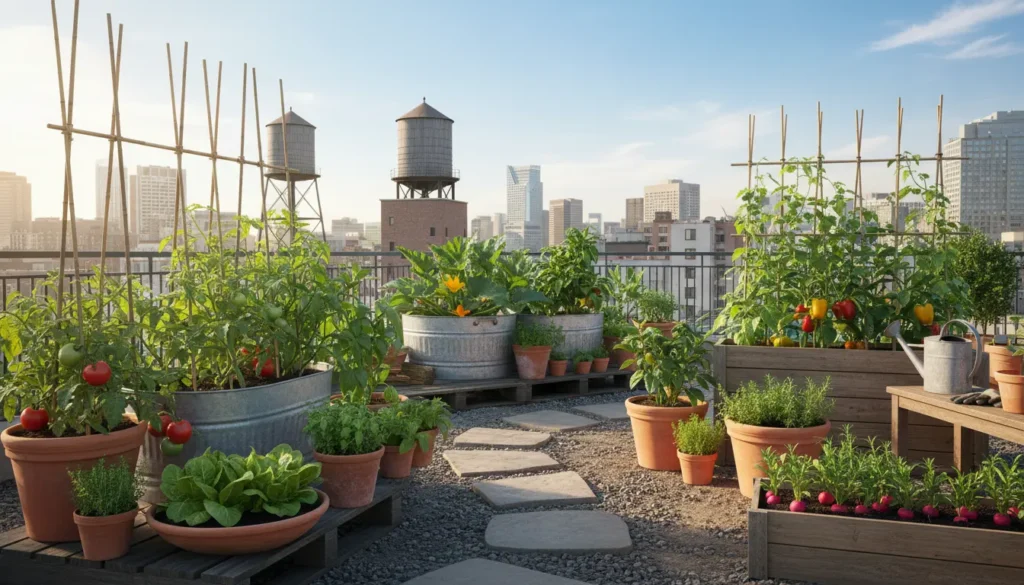
Container vegetable gardens fit small spaces and make fresh food accessible to beginners. They reduce soil-borne disease risk and let you control growing conditions.
This guide walks through equipment, plant selection, soil, watering, maintenance, and a short real-world example to get you growing quickly.
Planning Your Container Vegetable Garden
Start by assessing light, space, and your goals. Most vegetables need 6–8 hours of direct sunlight, so note sun patterns on your balcony or patio.
Decide whether you want a few pots for herbs and salad greens or larger containers for tomatoes and peppers.
Choose the Right Containers for a Container Vegetable Garden
Select containers with good drainage and enough volume. Small herbs thrive in 1–3 gallon pots; tomatoes and peppers prefer 5–10 gallon containers.
- Materials: plastic, ceramic, fabric grow bags, or wood — each affects moisture and temperature.
- Drainage: drill or ensure holes; elevate pots to let water escape.
- Mobility: use casters or saucers if you need to move heavy pots with sun changes.
Soil and Fertilizer Basics for a Container Vegetable Garden
Use a high-quality potting mix made for containers instead of garden soil. Potting mix stays light and drains properly.
Mix in slow-release organic fertilizer at planting, then supplement every 3–4 weeks with a balanced liquid feed during the growing season.
Soil Mix Recipe Example
- 50% premium potting mix
- 20% compost for nutrients
- 20% coconut coir or peat for moisture retention
- 10% perlite or vermiculite for drainage
Plant Selection and Spacing in a Container Vegetable Garden
Pick vegetables suited to containers and your climate. Good beginner choices include lettuce, spinach, radishes, bush beans, dwarf tomatoes, peppers, and herbs.
Check mature container size needs on seed packets and avoid overcrowding to reduce disease and maximize yield.
Companion Planting Examples
- Lettuce under taller tomato plants for shade on hot afternoons.
- Basil next to tomatoes may help flavor and deter pests.
- Radishes as a quick crop between slower-growing transplants.
Watering and Irrigation Tips for a Container Vegetable Garden
Containers dry out faster than ground soil. Water deeply until it drains from the bottom, then check daily during hot spells.
Consider drip irrigation or self-watering containers to maintain consistent moisture and reduce daily maintenance.
Watering Schedule Example
- Cool spring: every 2–3 days
- Warm summer: daily or twice daily for large, sun-exposed pots
- After heavy rain: skip until top inch dries
Pest Control and Common Problems in a Container Vegetable Garden
Monitor plants weekly for pests and nutrient deficiencies. Container plants show stress quickly, so catch problems early.
Use these practical controls:
- Handpick larger pests like caterpillars.
- Apply insecticidal soap for aphids and whiteflies.
- Rotate crops in containers by switching plant families between seasons if possible.
Maintenance and Seasonal Care for a Container Vegetable Garden
Feed regularly, prune leggy growth, and remove spent plants. Refresh the top inch of soil each season and replace potting mix every 2–3 years.
Move containers to protect tender plants from overnight cold or to increase sun exposure in late season.
End-of-Season Checklist
- Harvest remaining produce and remove debris to reduce pests.
- Empty and clean containers; store or refill with fresh mix.
- Plan next season based on what worked and what didn’t.
Shallow-rooted greens like lettuce and spinach can produce multiple harvests from a single planting when you cut outer leaves and leave the crown intact.
Simple Case Study: Maria’s Balcony Container Vegetable Garden
Maria had a small south-facing balcony and wanted fresh salad greens. She used three 5-gallon containers: one for mixed lettuce, one for cherry tomatoes, and one for basil and chives.
Within two months she harvested weekly salads. The tomato plant gave steady fruit all summer after staking, and basil reduced a persistent aphid problem when planted near tomatoes.
Her keys to success were regular watering, monthly liquid feeding, and moving pots into shade during heatwaves.
Quick Start Checklist for a Container Vegetable Garden
- Assess sun and space: 6–8 hours target.
- Choose containers with drainage and appropriate size.
- Use a quality potting mix and add compost.
- Select easy container crops: lettuce, herbs, dwarf tomatoes.
- Water consistently; consider drip or self-watering pots.
- Fertilize monthly and monitor for pests.
Final Tips for Long-Term Success
Start small and expand as you learn. Keep a simple calendar for planting and feeding, and note which varieties perform best in your microclimate.
With reasonable care, a container vegetable garden will reward you with fresh produce, lower grocery costs, and the satisfaction of growing food in limited space.