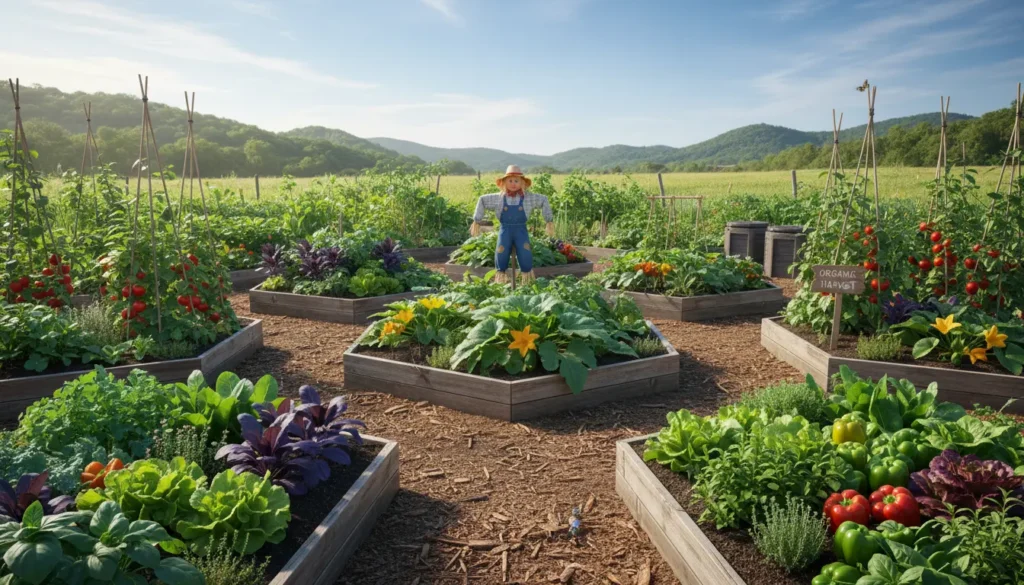
Why Start an Organic Vegetable Garden
Growing your own vegetables reduces grocery bills and gives you fresh, chemical-free produce. An organic vegetable garden also supports pollinators and improves soil health over time.
This guide explains practical steps to start and maintain an organic vegetable garden, with simple actions you can take this season.
Choose the Right Site for Your Organic Vegetable Garden
Select a location with at least 6 hours of direct sunlight per day for most vegetables. Good drainage and easy access to water are essential.
Avoid low spots that collect cold air or places near large trees, which compete for nutrients and water.
Sun, Soil, and Space: Basics for an Organic Vegetable Garden
Evaluate soil by digging a small hole and checking for crumbly, dark soil. If soil is compacted or sandy, plan to amend it with compost.
Measure available space and decide between in-ground beds, raised beds, or containers. Raised beds warm earlier and offer better drainage.
Prepare Soil and Compost for an Organic Vegetable Garden
Healthy soil is the foundation of organic gardening. Test soil pH and nutrient levels using a home kit or local extension service.
Work in generous amounts of compost to improve texture, structure, and fertility. Aim for 2 to 4 inches of compost mixed into the top 6 to 8 inches of soil.
Compost and Natural Amendments
- Use finished compost to add organic matter and beneficial microbes.
- Add well-rotted manure sparingly to boost nutrients.
- Use lime or sulfur only if soil pH needs adjusting based on test results.
Pick Vegetables That Fit Your Organic Garden
Choose plants that match your climate, season, and experience level. Fast-growing, forgiving crops are best for beginners.
- Easy starters: lettuce, radishes, spinach, bush beans, and cherry tomatoes.
- Long-season crops: peppers, eggplants, and vining tomatoes need more care.
- Group plants by water needs to simplify irrigation.
Planting and Crop Planning for an Organic Vegetable Garden
Follow seed packet or plant tag spacing to avoid overcrowding, which can encourage disease. Stagger planting dates for continuous harvest.
Practice crop rotation: avoid planting the same family in the same spot two years running. Rotation breaks pest and disease cycles.
Companion Planting and Mulching
Use companion plants to deter pests and attract beneficial insects. Marigolds, basil, and nasturtiums are common choices.
Apply organic mulch such as straw, shredded leaves, or grass clippings to retain moisture and suppress weeds.
Watering, Feeding, and Organic Pest Control
Water deeply and less frequently to encourage strong root systems. Early morning watering reduces disease risk.
Feed plants with compost tea or well-balanced organic fertilizers when needed rather than routine heavy feeding.
Nonchemical Pest Management
- Monitor plants weekly for pests and disease signs.
- Handpick large pests like caterpillars and slugs.
- Use row covers to protect young plants from insect attack.
- Introduce or encourage beneficials: ladybugs, lacewings, and parasitic wasps.
One cubic yard of compost can improve soil in about 100 square feet of garden by adding organic matter and nutrients.
Maintenance Tips for a Productive Organic Vegetable Garden
Keep weeds under control and remove diseased foliage immediately. Thin seedlings to recommended spacing to reduce competition.
Staking and trellising help vining plants and improve airflow, lowering disease risk.
Harvesting and Storage
Harvest regularly to encourage more production. Pick vegetables in the morning when they are firm and cool for best flavor.
Store produce properly: leafy greens in cool, moist conditions and root crops in a dark, cool place for longer storage.
Small Case Study: Community Garden Success
In one neighborhood, volunteers converted a vacant lot into a 10-bed organic vegetable garden. In the first season they grew lettuces, beans, tomatoes, and squash.
They used a simple rotation plan, built compost from yard waste, and shared harvests with a food pantry. Within a year the soil organic matter improved and pest problems declined.
Quick Checklist to Start Your Organic Vegetable Garden
- Choose a sunny, well-drained site.
- Test soil and add compost.
- Select beginner-friendly vegetables suited to your climate.
- Use mulch, rotate crops, and monitor pests.
- Water deeply, fertilize organically as needed, and harvest regularly.
Starting an organic vegetable garden is a series of small decisions: site selection, soil building, plant choice, and maintenance. With the steps above, you can set up a productive garden that rewards you with fresh, seasonal food and a healthier yard ecosystem.