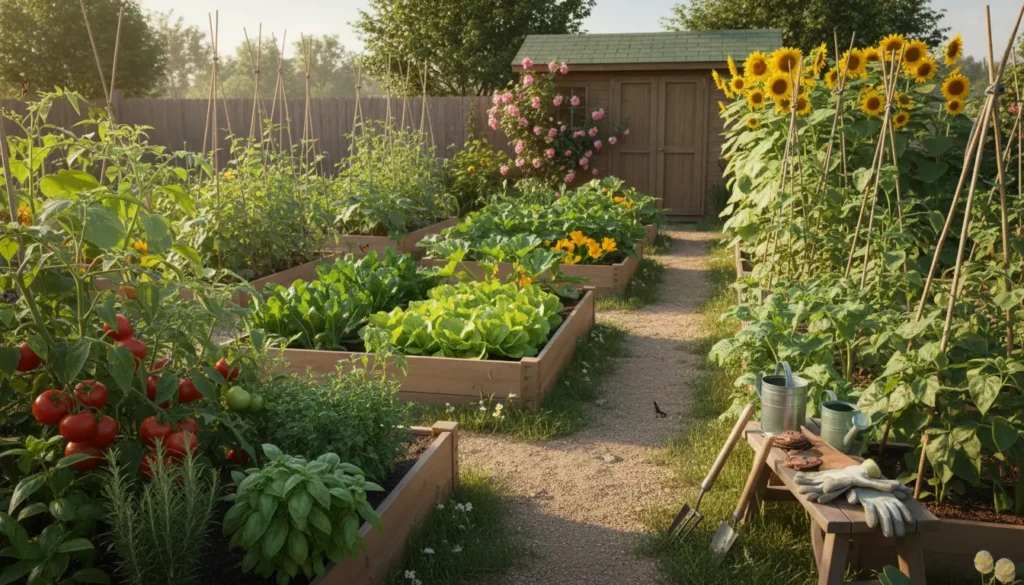
Start With a Simple Plan for a Small Vegetable Garden
Starting a small vegetable garden begins with a clear, simple plan. Decide what you want to grow and why—fresh salad greens, herbs, or a few tomato plants will shape your choices.
Limit the first garden to a few crops you like and that are easy to grow. This reduces complexity and makes maintenance manageable.
Choose the Best Location for a Small Vegetable Garden
Sunlight is the top priority for a small vegetable garden. Most vegetables need at least 6 hours of direct sun daily. Observe your yard or balcony through one full day to find the sunniest spot.
Consider access and convenience. Place the garden near a water source and close to the kitchen for easy harvesting.
Options for Small Spaces
- Raised beds: Good for controlled soil and drainage.
- Containers: Ideal for balconies and patios; use quality potting mix.
- Vertical gardening: Save space with trellises for peas, beans, and cucumbers.
Prepare Soil and Containers for Planting
Healthy soil is the foundation of a productive small vegetable garden. If using the ground, test the soil pH and loosen compacted areas.
In containers and raised beds, use a mix of compost, topsoil, and a light potting component. Aim for loose, well-draining soil rich in organic matter.
Soil Mix Example
- 40% topsoil
- 40% compost
- 20% perlite or coarse sand for drainage
Pick the Right Vegetables for a Small Vegetable Garden
Choose vegetables suited to your climate and space. Fast-growing crops give quick rewards and are ideal for beginners.
Start with these easy options:
- Lettuce and salad greens — quick harvest in 30–45 days.
- Radishes — very fast and space efficient.
- Herbs like basil, parsley, and chives — useful and compact.
- Dwarf tomato varieties and peppers — great for containers.
Planting Schedules and Spacing
Follow seed packet or plant tag instructions for spacing and depth. In small gardens, efficient spacing matters; use succession planting to get continuous harvests.
Example succession: sow lettuce every two weeks in spring for a steady supply.
Watering and Routine Maintenance
Consistent watering supports healthy growth in a small vegetable garden. Water deeply and less often rather than frequent light sprinklings.
Mulch around plants to keep soil moisture stable and suppress weeds. Organic mulches like straw or shredded leaves work well.
Watering Tips
- Check moisture by feeling soil an inch below the surface.
- Use drip irrigation or soaker hoses to save water and reduce leaf wetness.
- Water early in the morning to reduce disease risk.
Pest Control and Plant Health in a Small Vegetable Garden
Monitor plants weekly for pests and diseases. Early detection makes control easier and reduces chemical use.
Use these practical methods:
- Hand-pick large pests like caterpillars and beetles.
- Encourage beneficial insects with flowers like marigolds and alyssum.
- Use row covers for young plants to prevent insect damage.
Interplanting fast-growing greens between slower crops can increase yield per square foot. This technique, called succession or intercropping, maximizes a small vegetable garden area.
Harvesting and Extending the Season
Harvest frequently to encourage more production. Pick ripe vegetables at their peak for best flavor and to free space for new plants.
Use row covers or cold frames to extend the season a few weeks in spring and fall. Even a small garden benefits from season extension tools.
Simple Case Study: A Balcony to Table Example
Case study: Maria converted a 6-foot balcony into a productive small vegetable garden. She used three containers, two hanging baskets, and a small trellis.
Her choices: cherry tomatoes, basil, lettuce, and pole beans. By planting compact varieties and staggering sowings, she harvested fresh salad greens within four weeks and tomatoes by week ten.
Key actions that worked for Maria:
- Prioritized sunlight and placed containers on the sunny rail.
- Used a commercial potting mix boosted with compost for nutrients.
- Watered with a watering can twice weekly and added mulch to keep moisture.
Common Mistakes to Avoid in a Small Vegetable Garden
- Overcrowding plants—gives poor air flow and low yields.
- Using garden soil in containers—leads to compaction and drainage issues.
- Neglecting regular watering—small soil volumes dry out fast.
Final Checklist for Your Small Vegetable Garden
- Plan your crops and schedule for succession planting.
- Choose a sunny location and appropriate containers.
- Use quality soil mix and add compost regularly.
- Water consistently and mulch to preserve moisture.
- Inspect plants weekly for pests and harvest often.
With a basic plan and consistent care, a small vegetable garden can supply fresh produce and valuable gardening experience. Start small, learn each season, and expand as you gain confidence.