Why Start a Vegetable Garden in Small Spaces?
Growing food in limited space saves money, reduces food miles, and improves mental health. Small-space vegetable gardens are flexible and can fit balconies, patios, windowsills, or a tiny yard.
With the right approach you can produce fresh greens, herbs, and even fruit in containers or raised beds. This guide shows practical steps to start a vegetable garden in small spaces and get reliable results.
Planning to Start a Vegetable Garden in Small Spaces
Good planning makes small-space gardening productive and low-stress. Think about sunlight, container size, plant choices, and how much time you can commit to watering and care.
Measure the available area and note where sun falls during the day. Most vegetables need at least 4–6 hours of direct sun to produce well, so prioritize bright spots.
Choose the Right Location for a Vegetable Garden in Small Spaces
Select a spot with the best available light and easy access to water. Balconies facing south or west typically get the most sun; north-facing areas work for leafy greens.
Consider wind exposure and weight limits on balconies. Moveable containers are useful for shifting plants to better light or shelter during bad weather.
Pick Suitable Containers and Raised Beds
Containers should be large enough for the mature root system of the crop. Use at least 6–8 inch deep pots for herbs and salad greens, 12+ inches for tomatoes and peppers, and deep, wide containers for root crops.
Materials such as plastic, fabric grow bags, and wood work well. Ensure containers have drainage holes to prevent waterlogging and root rot.
Soil, Fertilizer, and Plant Selection
Use a quality potting mix rather than garden soil for containers. Potting mixes drain well and hold nutrients in a form plants can use.
Add slow-release fertilizer or a balanced liquid feed every 2–4 weeks during the growing season. Organic options like compost or worm castings improve structure and fertility.
Best Plants to Start a Vegetable Garden in Small Spaces
Choose compact, high-yield, and fast-growing varieties suited to containers. Good beginner plants include cherry tomatoes, lettuce, spinach, Swiss chard, bush beans, radishes, and herbs like basil and parsley.
Use dwarf or patio varieties for larger crops. Vertical plants such as pole beans or indeterminate tomatoes can be trained up supports to save floor space.
Planting, Watering, and Care
Plant according to spacing instructions and follow depth guidelines from seed packets or plant tags. Dense planting of small crops like microgreens saves space while giving multiple harvests.
Water consistently. Containers dry faster than beds, so check moisture daily in warm weather. Water deeply until water drains from the bottom to encourage strong roots.
Pest Control and Common Problems
Inspect plants weekly for pests and disease. Handpick slugs, use insecticidal soap for aphids, and remove diseased leaves immediately to limit spread.
Good airflow and not over-watering reduce fungal problems. Rotate crop types seasonally if you use the same soil to reduce pest build-up.
Harvesting and Extending the Season
Harvest frequently to encourage continued production, especially with herbs and leafy greens. Pick tomatoes and peppers as they ripen to free energy for new fruit.
Use season extenders like cloches, frost cloth, or small cold frames to protect plants and lengthen the growing season by several weeks in spring and fall.
Did You Know?
Growing herbs in a sunny windowsill can produce up to 10 times more fresh herbs than buying the same volume from a grocery store over a month. Herbs regrow quickly if regularly harvested.
Simple Checklist to Start a Vegetable Garden in Small Spaces
- Measure available light and area.
- Choose containers sized for the intended crops.
- Buy quality potting mix and slow-release fertilizer.
- Select compact or dwarf plant varieties for containers.
- Set a watering routine and inspect for pests weekly.
Case Study: A Small Balcony Turned Productive
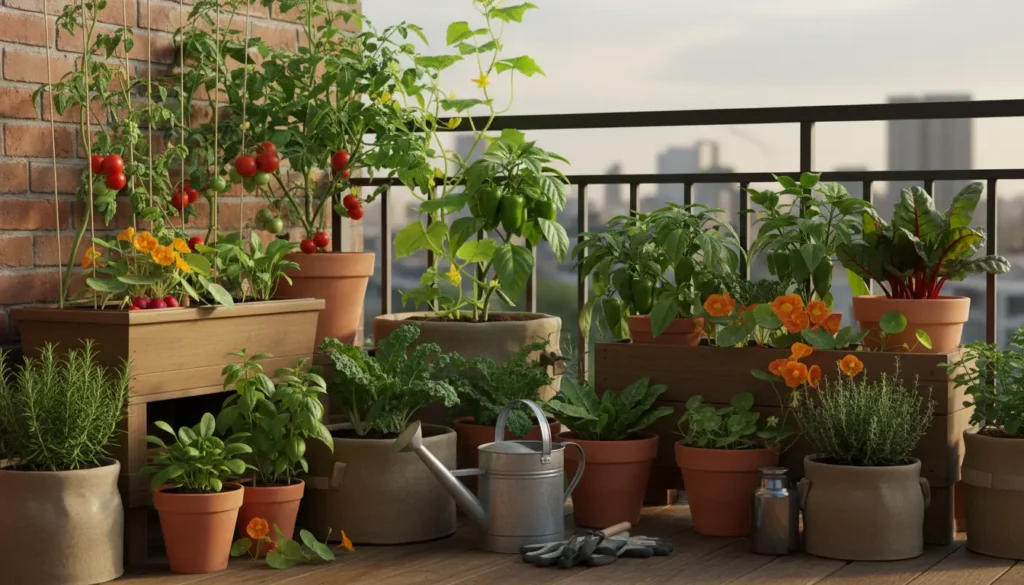
Maria had a 6-foot-wide balcony and wanted fresh greens for salads. She placed three 12-inch containers and two hanging planters along the railing. Maria chose a compact cherry tomato, two lettuce varieties, basil, and a dwarf pepper.
Using a commercial potting mix and weekly liquid feed, she watered every other day in summer and harvested twice weekly. Within eight weeks she had enough salad greens for 2–3 people each week and a steady supply of basil for cooking.
Her yield shows how modest space and the right choices can deliver continuous fresh produce with minimal complexity.
Final Tips to Start a Vegetable Garden in Small Spaces
Start small and expand as you learn what works in your microclimate. Keep notes on watering, varieties, and yields to improve future seasons.
With planning and simple care, any small space can become a productive vegetable garden. Focus on high-value, easy-care crops for the most satisfying results.